Case note · CNC turning · October 2026

Thin-wall 304 conical rings, turned without distortion

An overseas customer needed 48 conical rings in 304 stainless with a thin wall. Clamped the usual way, a ring like this bends before the cut even starts. We turned a holding fixture for the part and split the work into two operations.

Material
304 stainless
Quantity
48 pcs
Customer
Export order
Process
CNC turning, 2 ops
Main risk
Wall distortion
Fixture
Turned in-house
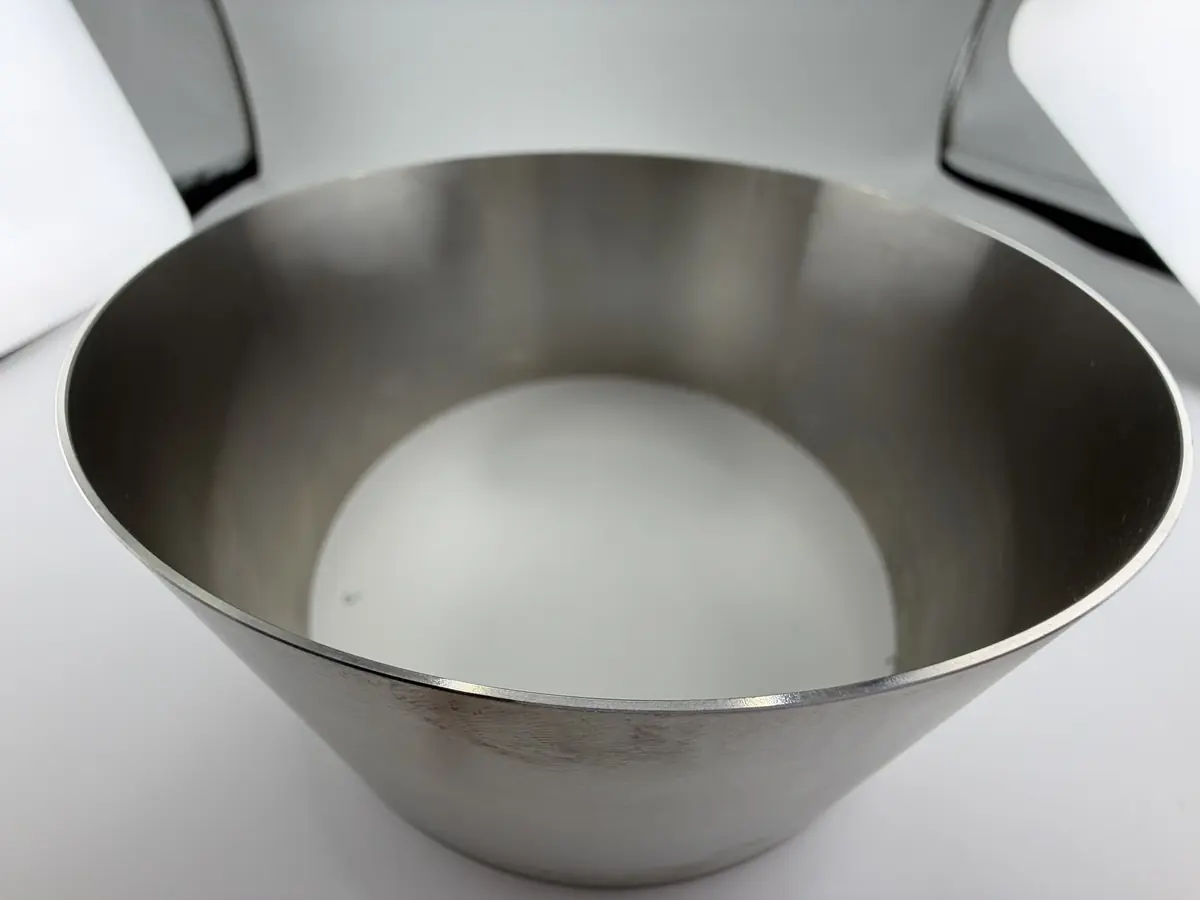
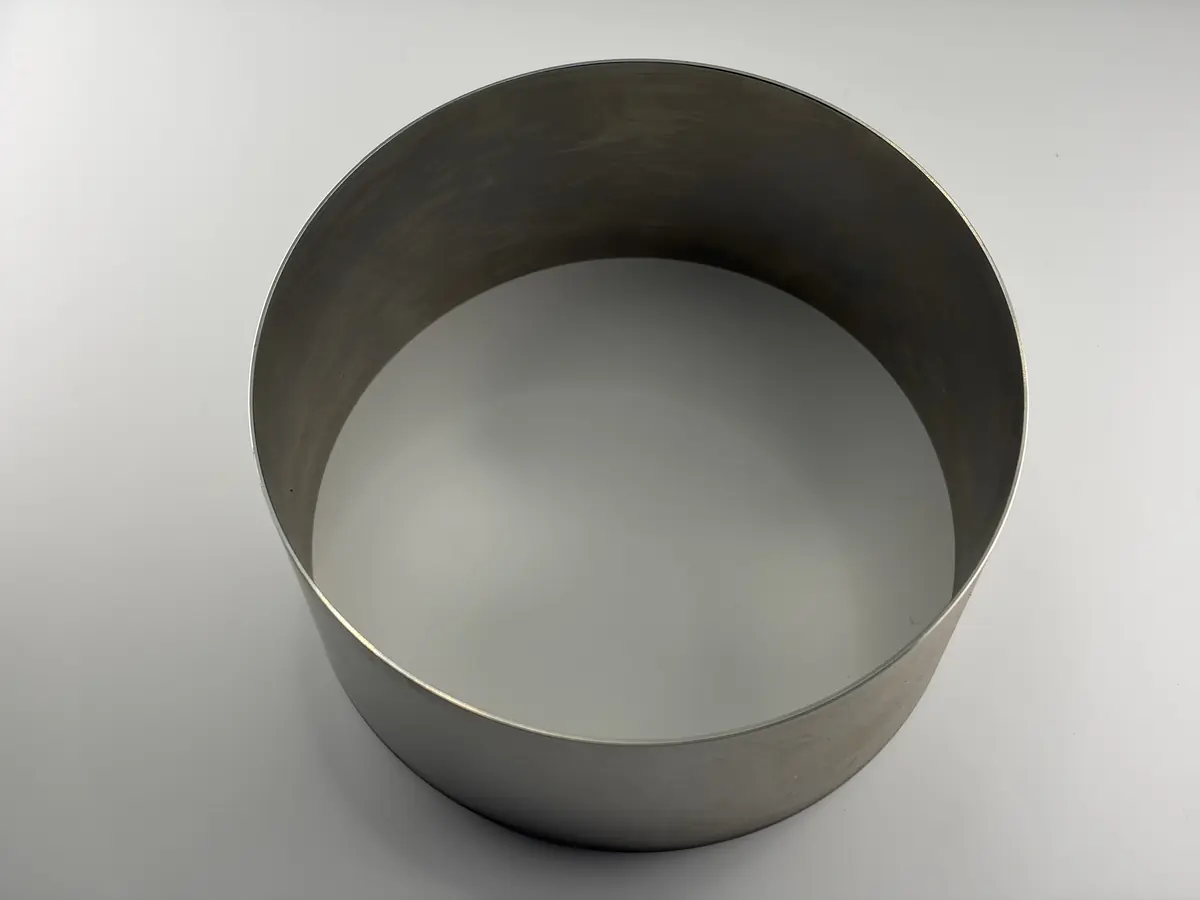
Finished thin-wall 304 stainless conical ring
One of the 48 finished rings. Drawing and customer details are not shown.
The problem

Why thin stainless rings are hard to turn

  • Clamping bends the wall. Three jaws push a thin ring into a slight triangle. It is cut round while clamped and springs out of round when released.
  • Cutting pressure makes it chatter. A thin wall flexes under the tool, which leaves marks and changes the wall thickness.
  • 304 holds heat and work-hardens. Heat moves the size during the cut, and a dull or rubbing tool hardens the surface.
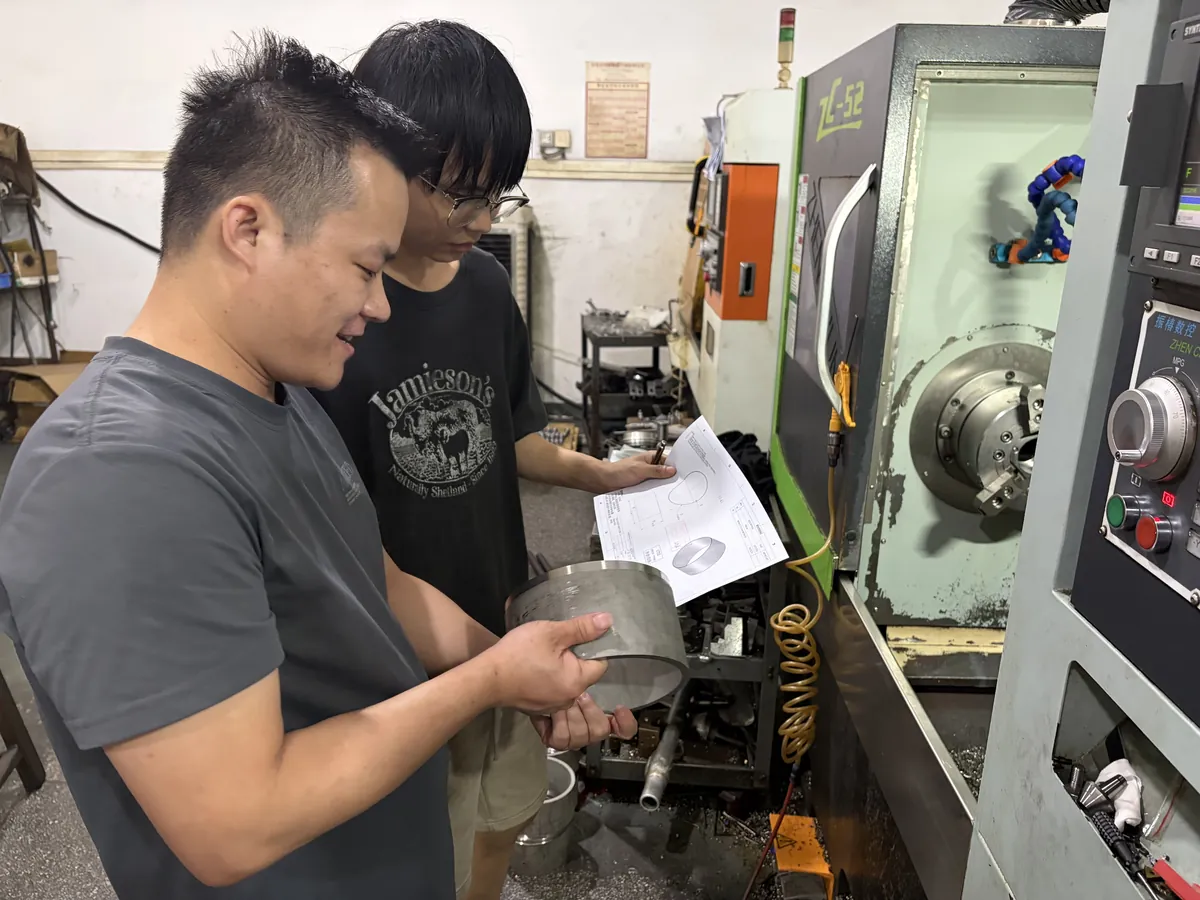
Raymond Liang and a machinist checking a thin-wall 304 ring against the drawing at the lathe
Raymond Liang (left) and the machinist reviewing the ring and its drawing at the lathe before the run.
Step 1 · Fixture

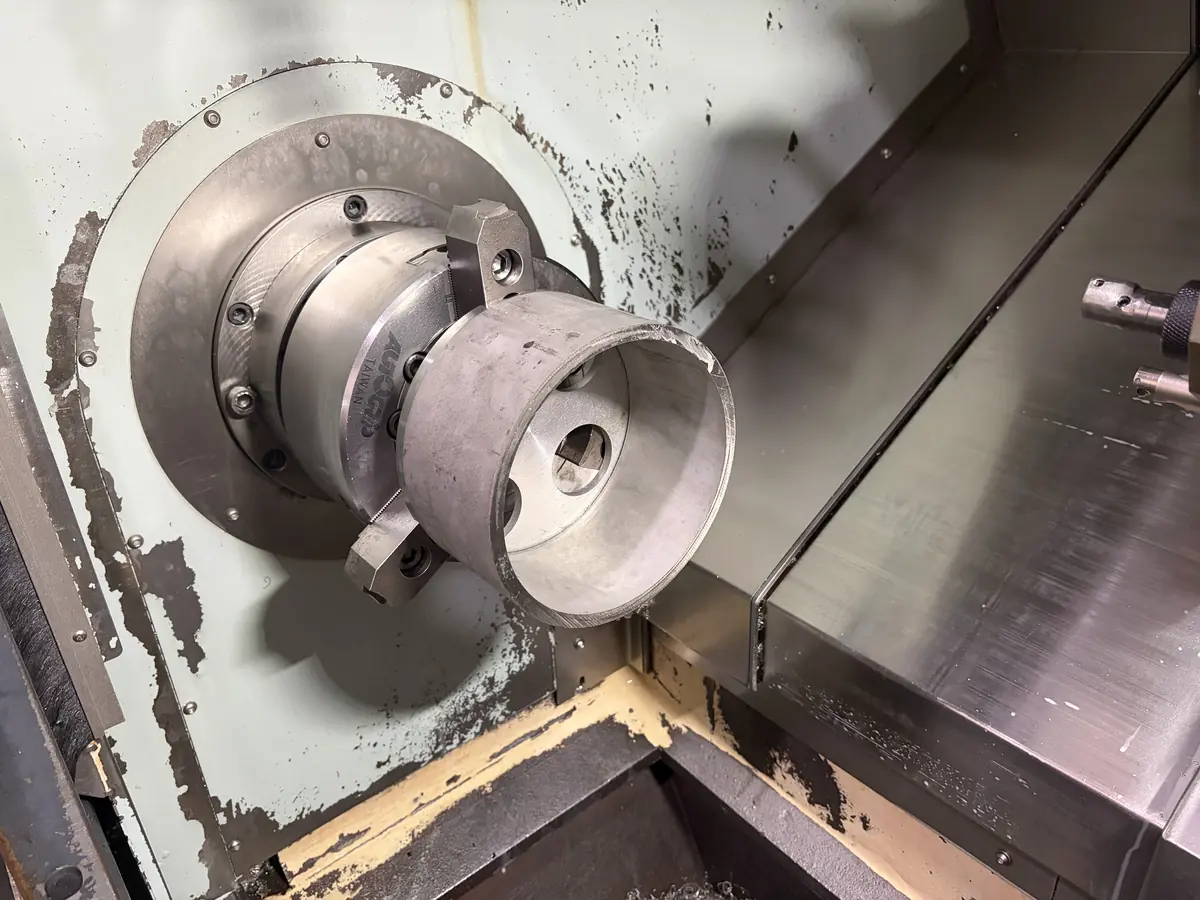
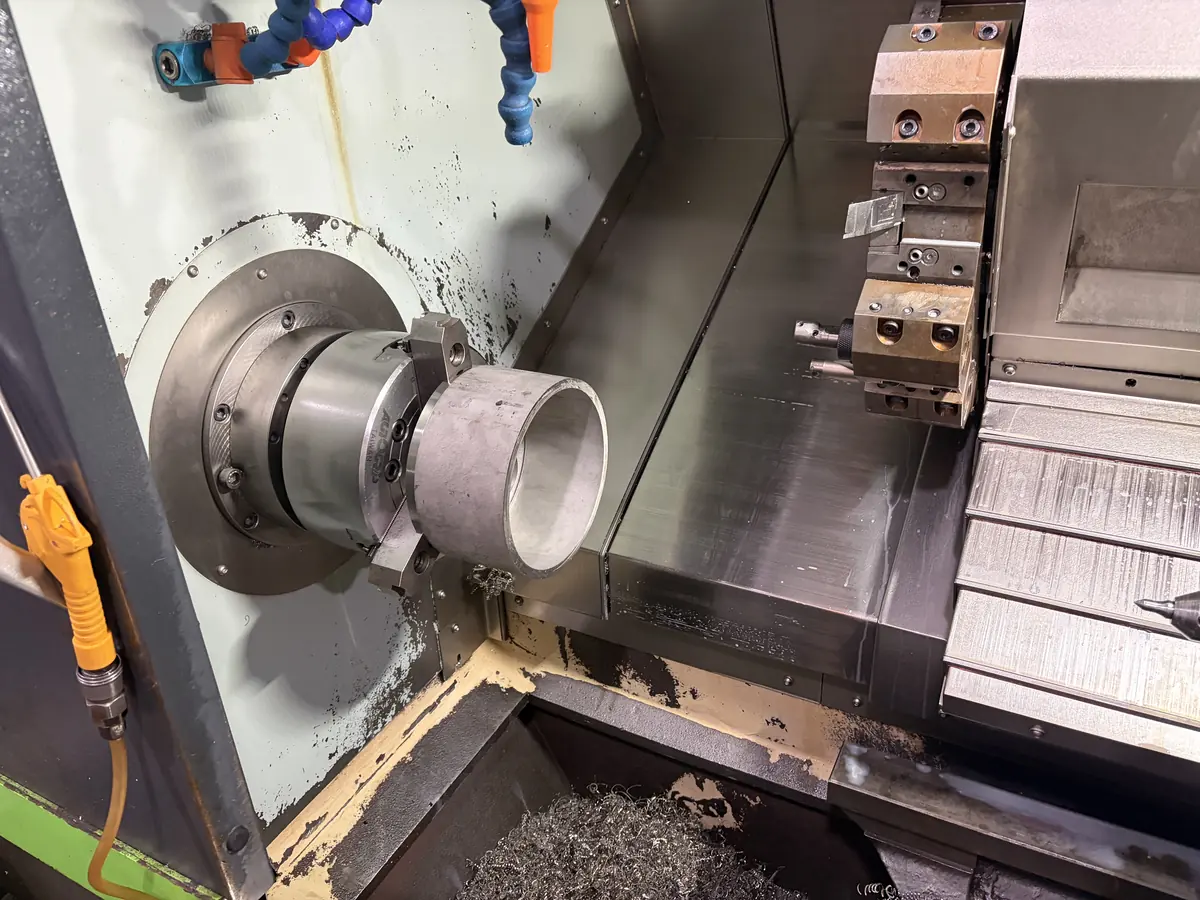
A holding fixture turned for this part

Instead of gripping the thin wall at three points, we turned a dedicated fixture on the lathe for this ring. It holds the part evenly, so the wall is not pushed out of shape while it is cut.

Because the fixture is turned on the same machine, it runs true to the spindle, and every one of the 48 rings sits the same way.

Thin-wall ring held in a dedicated fixture on the lathe spindle Ring on the dedicated fixture with the turning tool in position
Step 2 · Two operations

Turned in two operations, not one

First operation: the ring is turned on one side with stock left on the wall, while the part is still stiff.

Second operation: the ring is held in the fixture and the wall is finished to size with light cuts, so cutting pressure and heat stay low.

The clip shows the second operation on the fixture.

Real footage from our floor, October 2026.
Step 3 · Setup

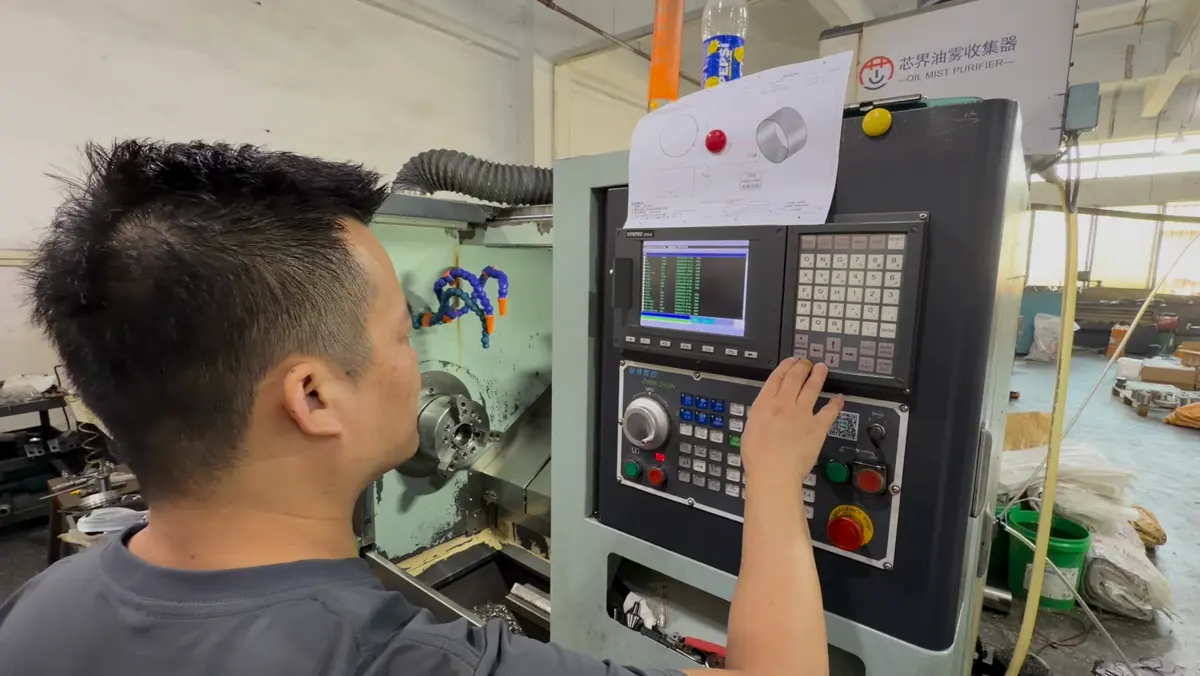
Set up by the person who reviewed the drawing

Raymond Liang, our co-founder, set up the program and offsets for this job himself. The same person who reads the drawing at quote stage decides how the part is held and cut.

Raymond Liang setting up the CNC lathe control for the thin-wall ring job
Raymond setting up the lathe for the ring job.
Result

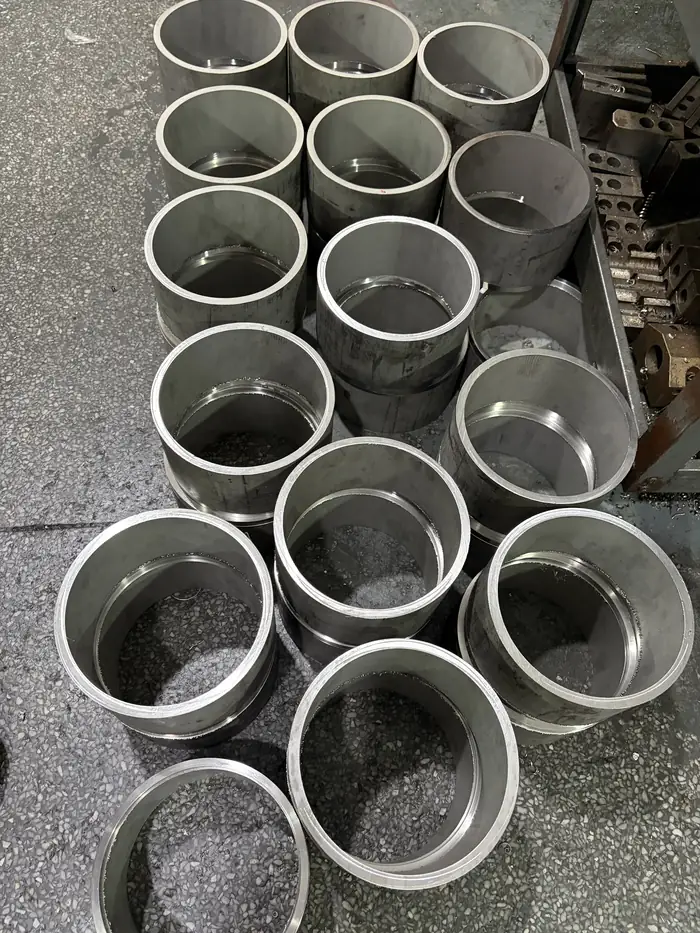
48 rings, held to the drawing

All 48 rings were turned on the same fixture and program, checked against the drawing, and packed for export. The fixture and program are kept, so a repeat order starts without a new setup.

More parts from recent orders →

Batch of finished thin-wall 304 stainless rings Finished thin-wall 304 ring seen from the side
For your drawing

Designing a thin-wall turned part?

Three things that make a thin-wall ring easier to make and cheaper to quote.

Mark the real datum

Tell us which diameter or face the part locates on. We hold the fixture to that feature, so the critical size is cut in the same setup.

Tolerance the wall, not every size

Put the tight tolerance on the feature that matters. A loose outside with a tight bore is much easier than everything tight.

Order enough to justify a fixture

A dedicated fixture pays for itself from about 20 pieces, and unit cost drops sharply from there.

Have a thin-wall part other shops struggle with?

Send the drawing. We'll tell you how we would hold it and quote it with DFM notes. Email reply within 24 hours.

Send Your Drawing CNC turning