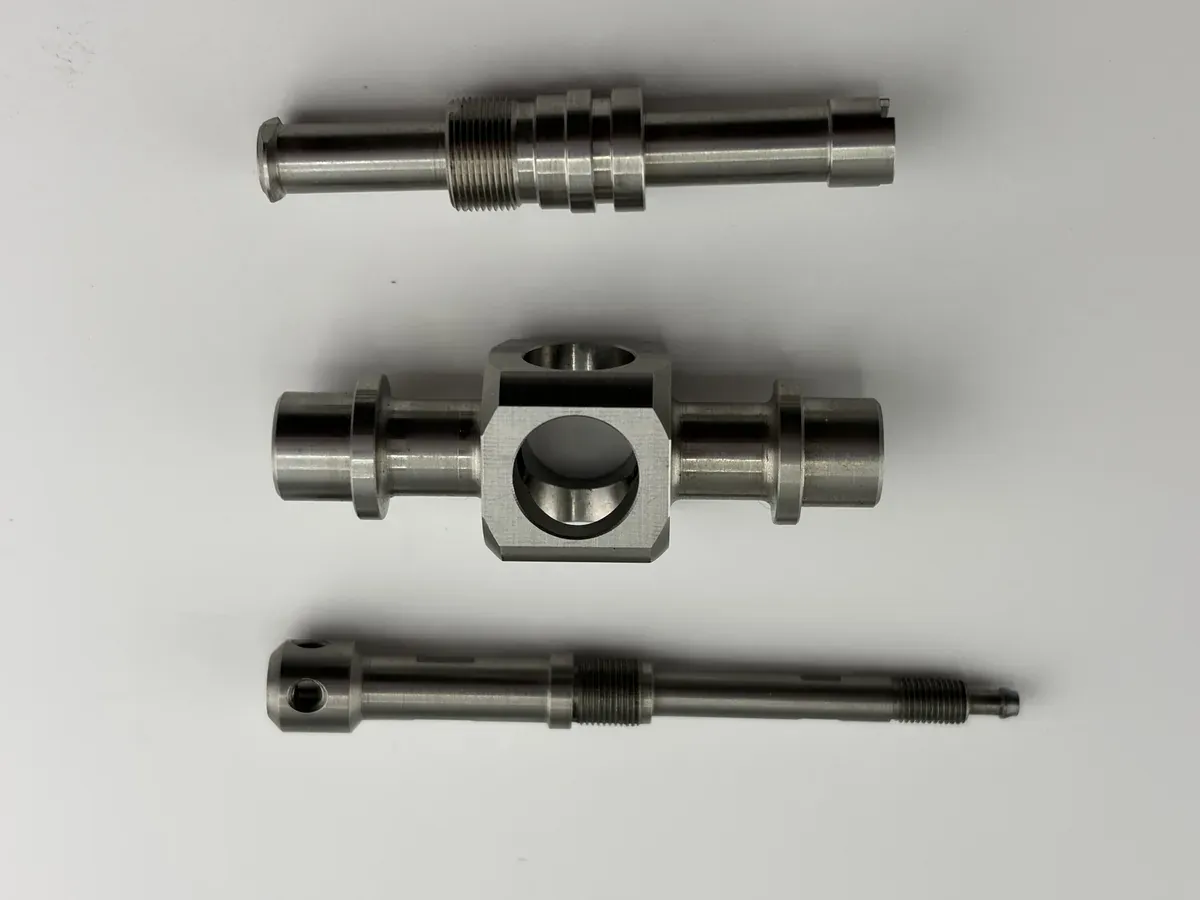
Shafts with milled cross blocks
Challenge: Threads, grooves, and a milled cross block with a bore, all concentric to the turned diameters.
Precision CNC turned parts for automation and robot equipment: shafts, bushings, nozzles, and threaded fittings in stainless, brass, copper, aluminum, and plastics. 8 CNC lathes in our own factory, from Ø1 mm up to Ø400 × 900 mm.
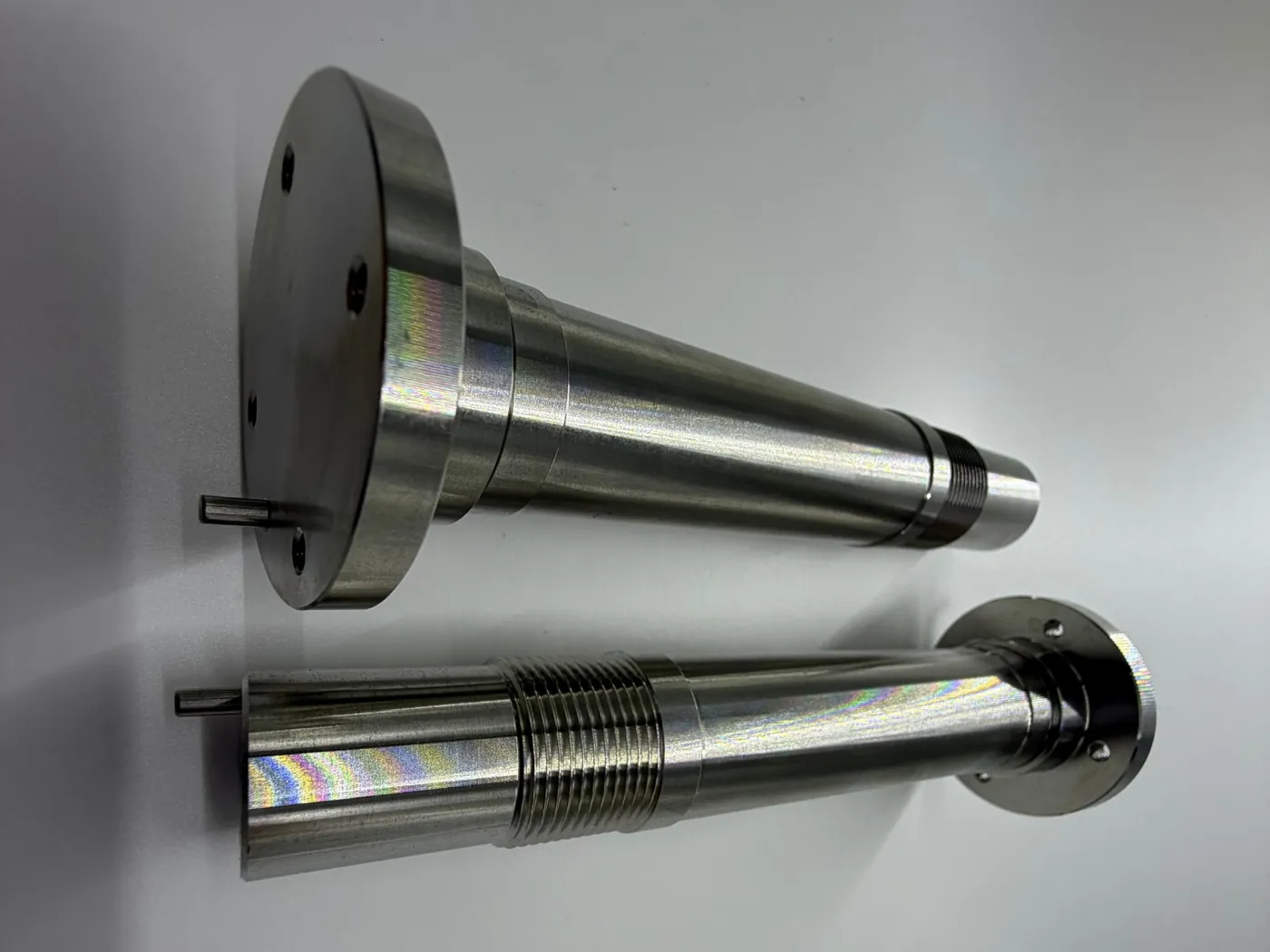 1Flange with bolt holes2Two diameters, concentric3Long external thread4Pin fitted in-house
| Machines | Count | Used for |
|---|---|---|
| CNC lathes with live tooling | 4 | Turned parts with cross holes, flats, and tapped holes |
| Turn-mill centers | 2 | Complex parts finished in one setup |
| Gang-tool lathes | 2 | Small, fast turned parts such as pins and bushings |
Turning is about 30% of our work, mostly for automation and robot equipment. Many of these parts are turned first and then finished on our 3+2 milling centers, so turned diameters and milled features stay related to one datum.
What we do not have: Swiss-type lathes or bar feeders. For tens of thousands of small pins from bar, a dedicated screw-machine shop will be cheaper. We are a better fit for precise parts in batches of 20 to 10,000 pieces, with prototypes as the first step toward the batch.
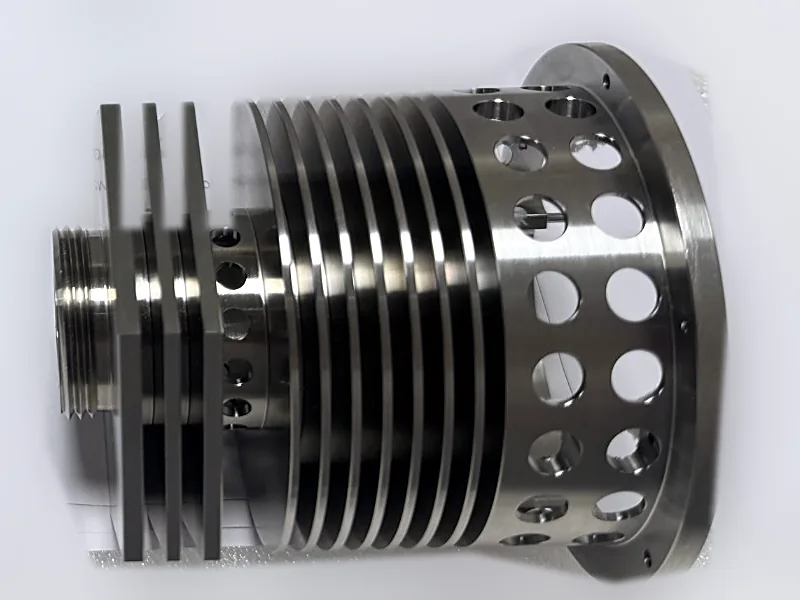
This stainless housing came to us after another supplier could not make it. The hard part was the row of deep ring grooves in the middle, held to 0.1 mm, on a part that also carries precise holes, an external thread, and imperial and metric tapped holes.
Raymond had a special grooving tool made for the deep grooves, which solved the precision turning. Everything else was machined in one setup, so the features stay related to each other. All 10 parts were delivered to the drawing.
Send a part others turned downMost turned parts end up screwed, pressed, or bolted to another part. This one is three 6061 aluminum bodies that thread together, machined, anodized, and assembled in our shop.
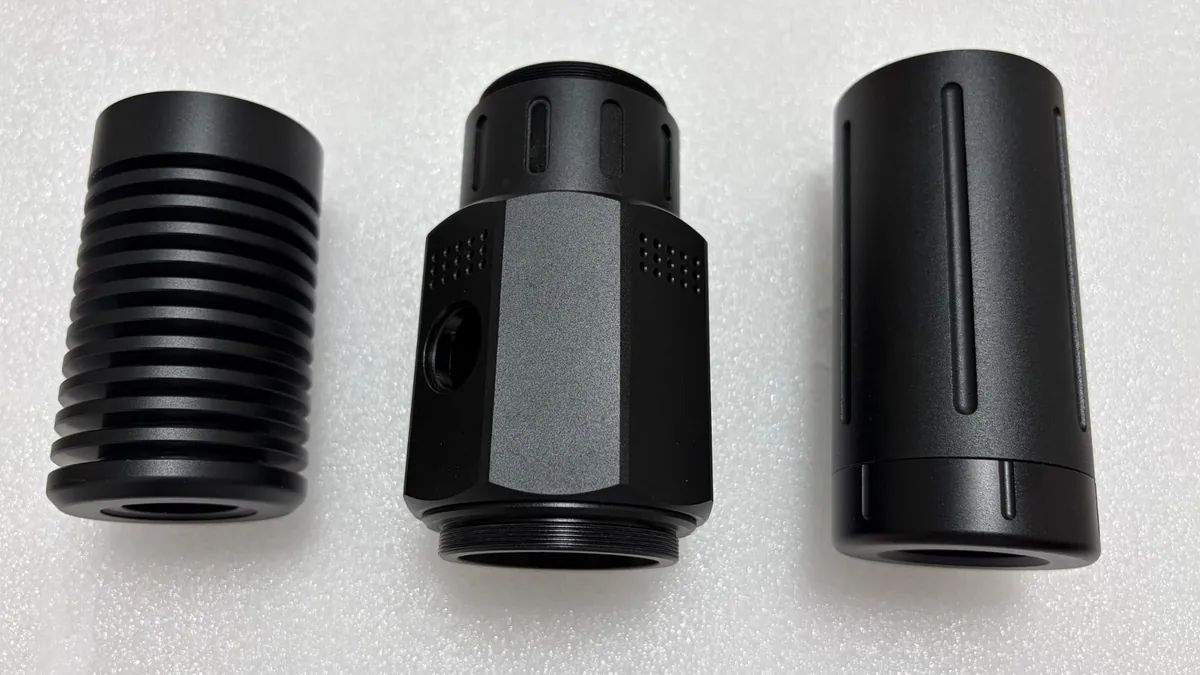
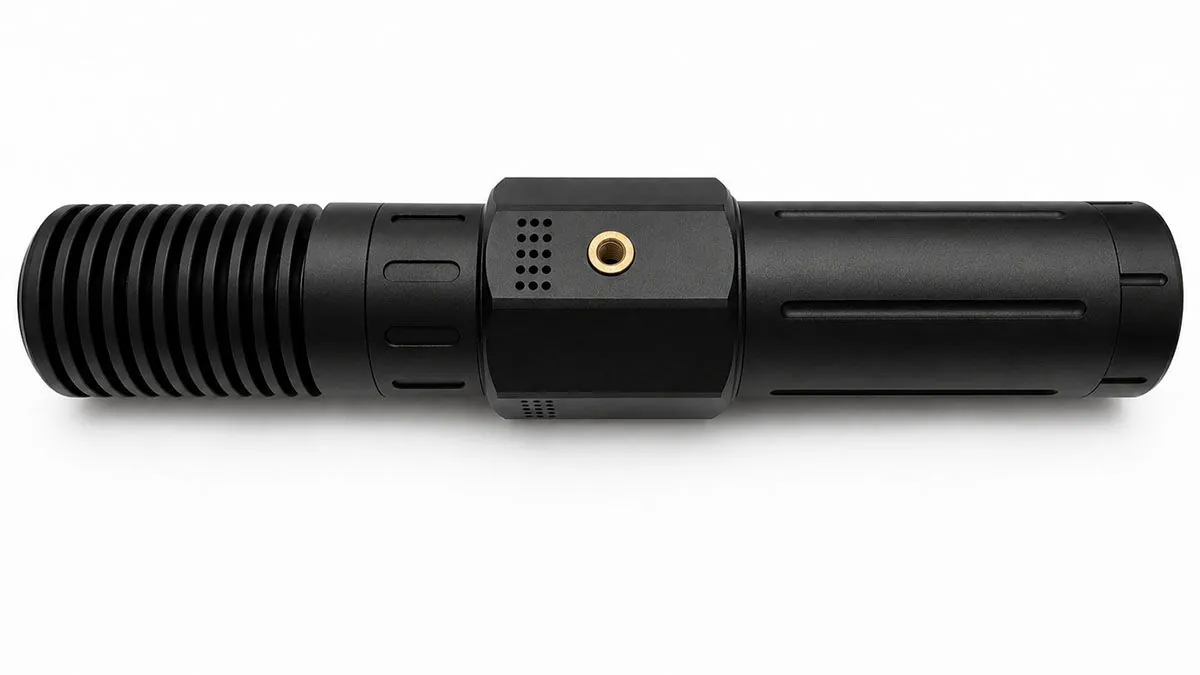
Precision turned parts and components, photographed after inspection, with the challenge that made each one hard. If yours looks similar, we have made it before.
Challenge: Threads, grooves, and a milled cross block with a bore, all concentric to the turned diameters.
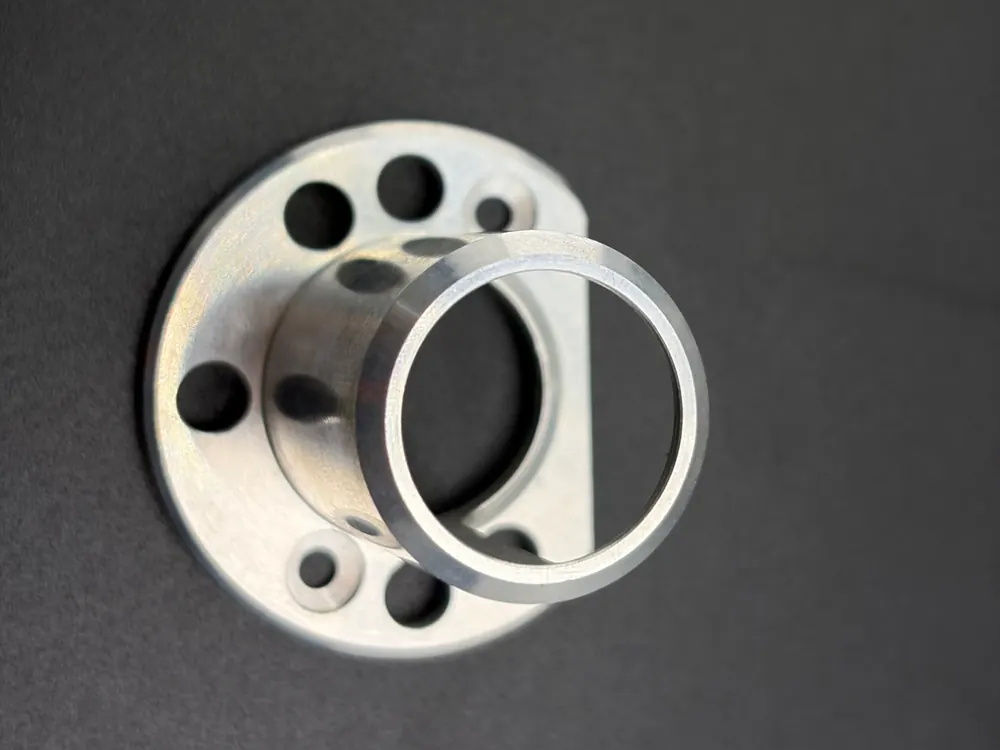
Challenge: Thin, irregular wall with H7/g6 fits on inside and outside diameters plus a runout callout.
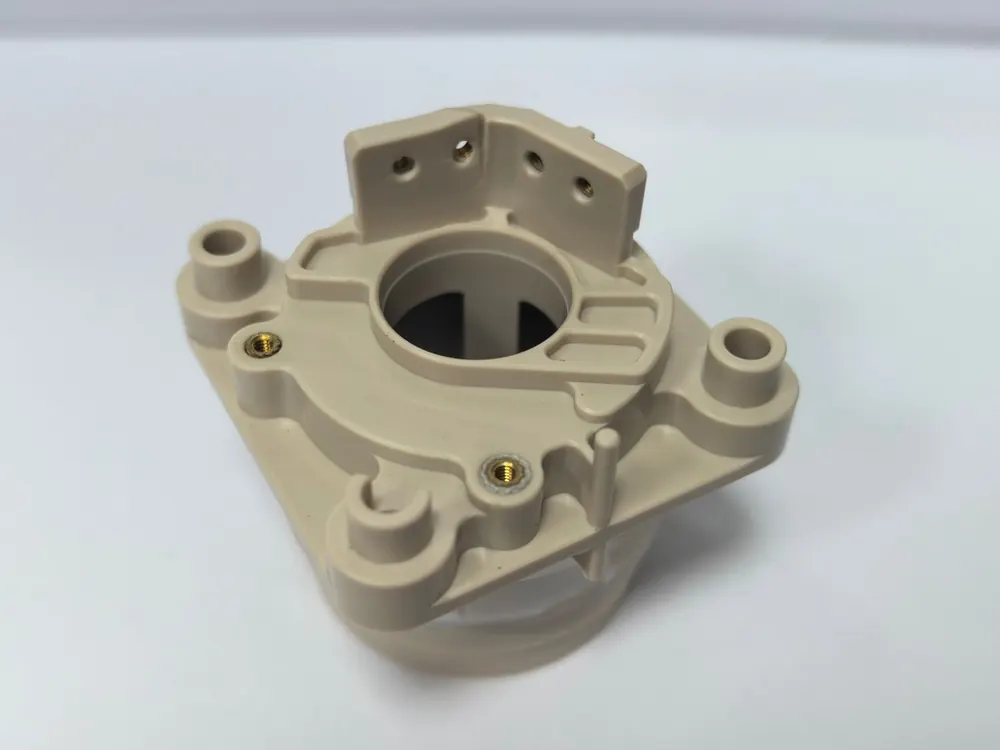
Challenge: Turned and milled features with many precise dimensions, then brass threaded inserts fitted.
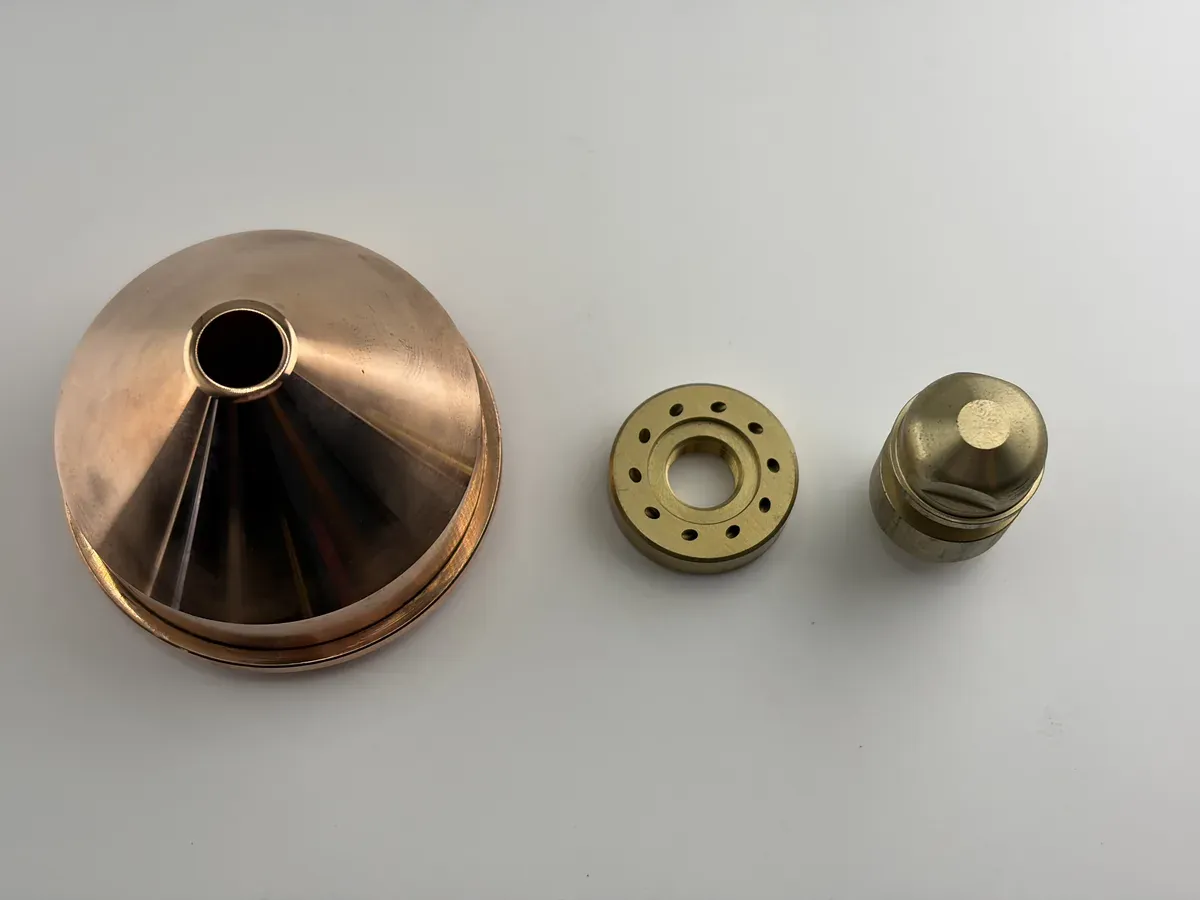
Challenge: Pure copper is gummy and tears easily; conical faces turned smooth and free of burrs.
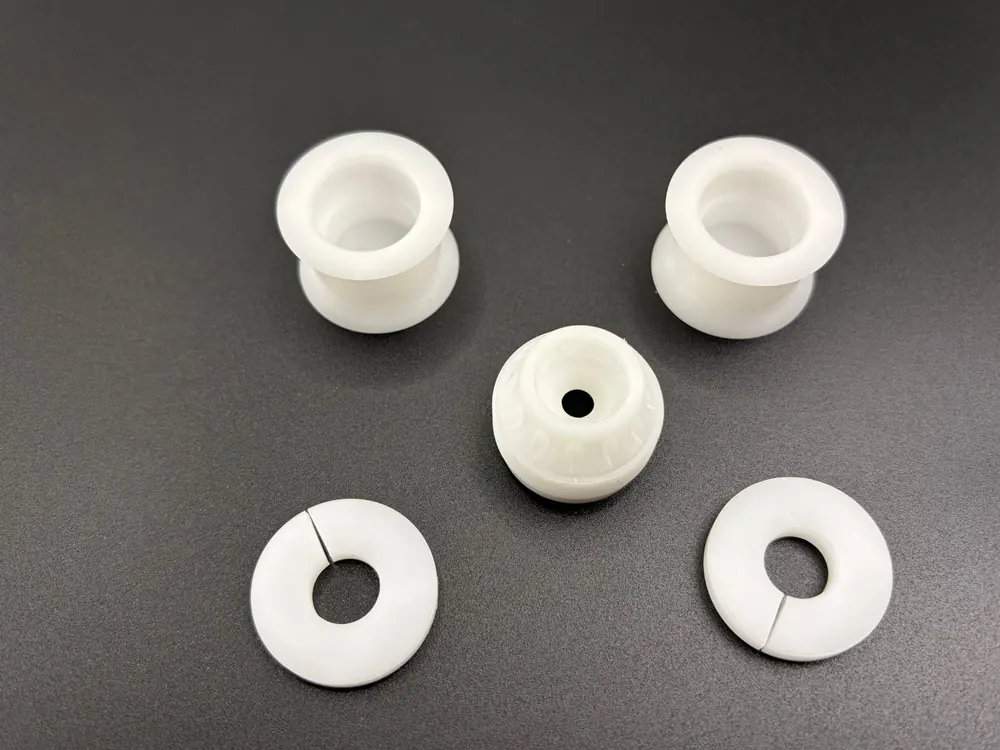
Challenge: Holding size on a material that moves with heat and clamping, with threads that seal.
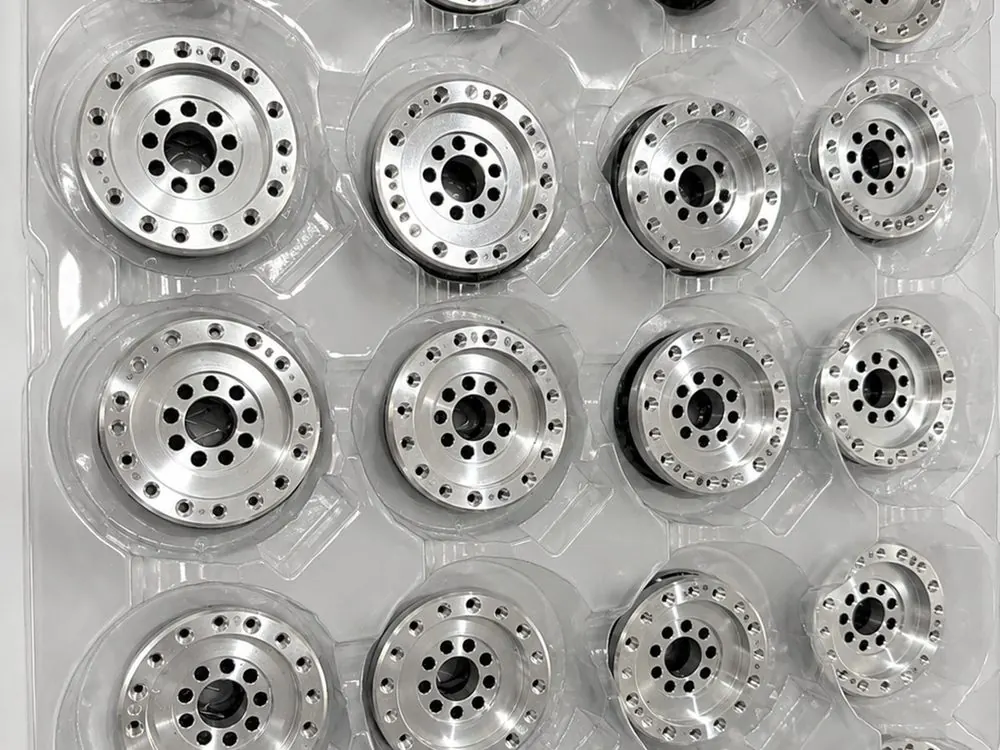
Challenge: Same program and fixture every batch, first article checked before the run, tray-packed by part number.
Most of the cost of a one-off part is the work before the first chip: drawing review, programming, fixturing, and proving out the first part. On one piece, that piece carries all of it. On 20, it is shared twenty ways. Ask for prices at a few quantities, for example 5, 20, and 50, and we'll quote each one.
Grades we turn every week, with the detail that matters on the lathe. Grade not listed? Send the drawing and we confirm availability before quoting.
| Material | Common grades | What we watch when turning it | Finishes |
|---|---|---|---|
| Stainless steel | 303, 304, 316, 440C | Work-hardens if the tool rubs; long shafts need steady support and chip control to stay straight. | Passivation, electropolish |
| Carbon & alloy steel | C45, 16CrMn5 | Turned before hardening, with stock left for size change after QPQ or vacuum heat treatment. | QPQ, vacuum heat treatment, black oxide |
| Aluminum | 6061, 6082, 7075 | Thin walls held round; sizes cut with allowance where anodizing or plating follows. | Anodizing incl. hard (up to 50 µm), nickel plating |
| Brass & copper | Brass, pure copper | Brass turns cleanly for fine threads; pure copper is gummy and needs sharp tools to avoid burrs. | As machined, nickel plating, polishing |
| Engineering plastics | POM, nylon, PEEK | Light clamping and sharp tools so diameters stay in size; threads and edges free of burrs. | As machined; threaded inserts fitted |
| Titanium | TC4 / Ti-6Al-4V | Low cutting speed and rigid setup to control heat and tool wear. | As machined, bead blast |
Shafts, housings, bushings, and threaded fittings in 303, 304, 316, and hardenable grades, turned in our own Dongguan factory and shipped direct. Stainless cuts slowly and work hardens, so this is how we keep sizes in a batch.
| Topic | How we handle it |
|---|---|
| Grades and stock | 303, 304, and 316/316L in stock as bar from about Ø3 to Ø50 mm; 316Ti, 17-4PH, 420, 440C, 430, and 2205 sourced in 3 days at most. Material certificates on request. |
| Heat and work hardening | Dedicated stainless inserts, feeds set to keep heat down, and coolant aimed at the cutting edge. Most of it is decided at process planning, before the first cut. |
| Long shafts | Steady support and chip control so shafts stay straight. Runout is typically held to 0.01 mm and checked on the machine while the part is still clamped. |
| Deep holes and threads | The drilling method is chosen to put the least stress into the part. A small tap that breaks in stainless is removed by EDM rather than scrapping the part. |
| Thin walls | Solution treatment after roughing to release stress, then finishing with even clamping. Walls go down to about 0.5 mm. |
| Tight and hardened sizes | 0.005 mm on specific features by turning, grinding, or wire EDM. 420 and 440C are hardened above HRC 50 by a partner, then critical sizes are ground. |
| Finishes | Passivation and electropolishing by specialist partners, bead blasting in house; sizes are re-checked when parts come back. |
| Lead time and cost | Simple parts from about 8 days, complex parts from about 15, including heat treatment and finishing. The same part costs about 20% more in stainless than in aluminum, mostly machining time. |
A 2D drawing, a 3D model, or both. Each works, as long as we get the details the file itself can't show.
The fastest, most accurate quote. The drawing carries the tolerances, the model carries the geometry.
That works if the drawing is clear and fully dimensioned. We build the 3D model ourselves. For complex parts, a 3D file is strongly preferred.
A model can't carry these, so tell us in your message. Features without a stated tolerance follow ISO 2768-m.
Drawing review and DFM feedback come with the quote. Email reply within 24 h, WhatsApp within 12 h. First order includes a free first-article report.
Thin walls that want to distort and a 10 µm diameter band, from real orders with measured results.
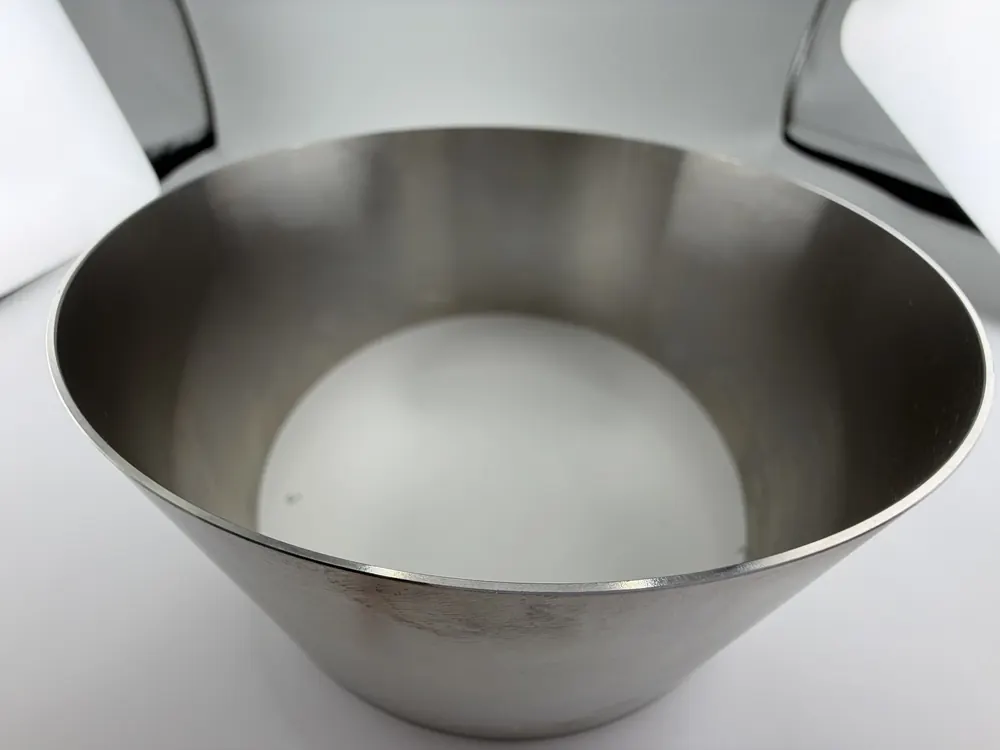 48 pcs
Walls that distort in a normal chuck. A dedicated fixture turned in-house, two operations per ring.
Read the case note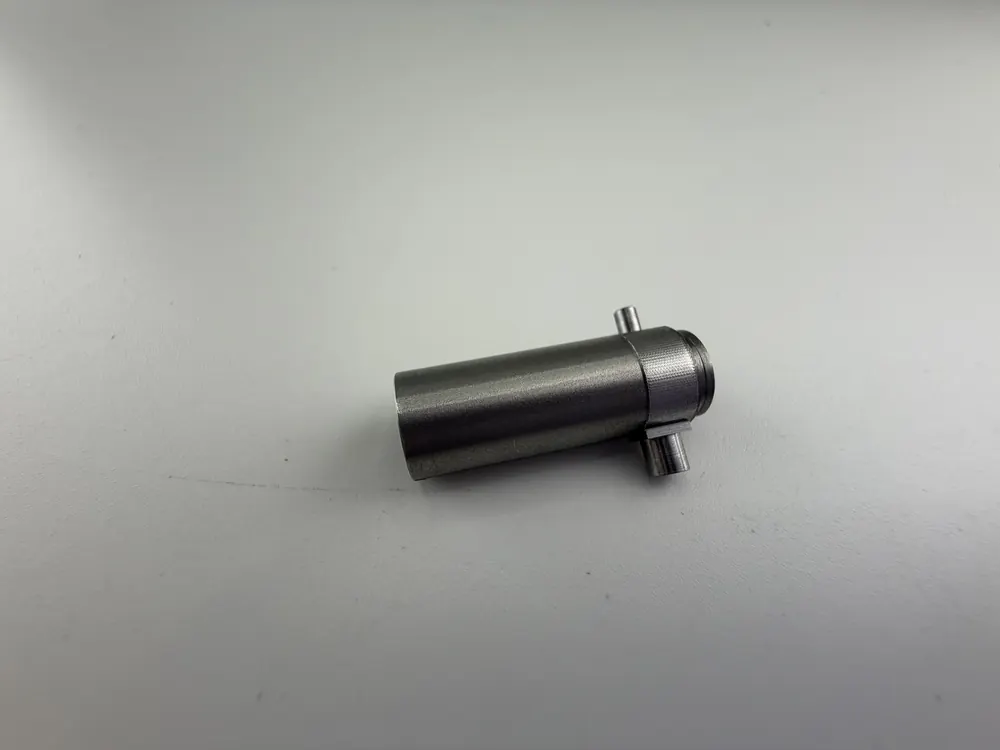 100 pcs
A 10 µm band on Ø8. Micrometer readings 7.987 and 7.988 mm against 7.98–7.99.
Read the case note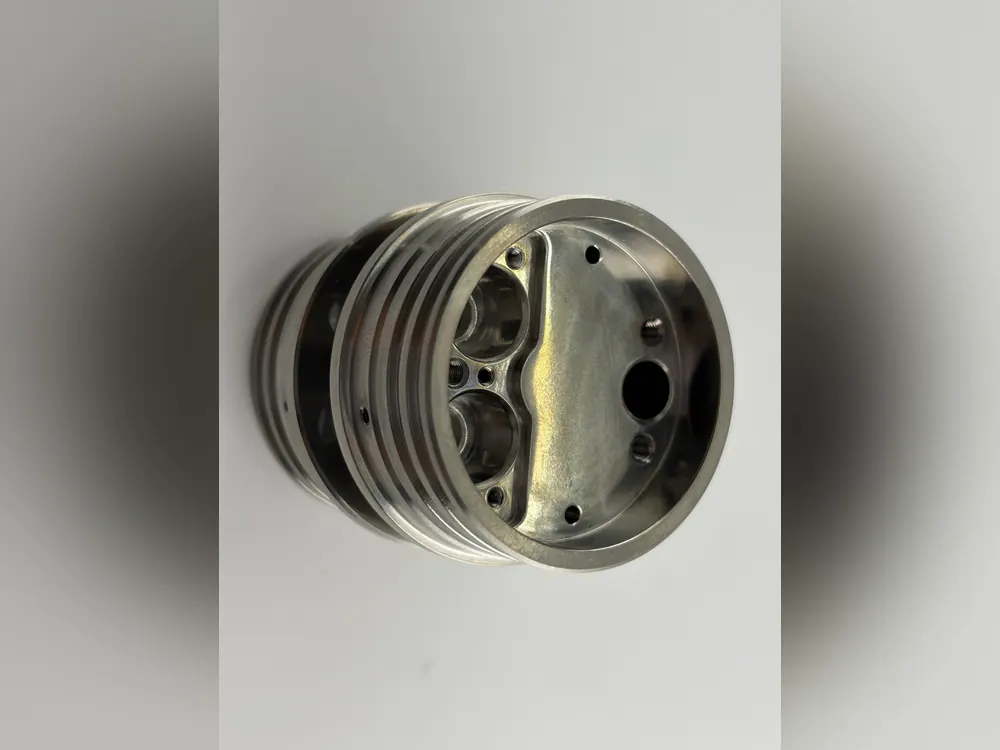 30 pcs
±0.05 mm on diameters and hole positions, Ra 1.6, M2 threads and Ø1.6 mm holes.
Read the case noteStandard turned features are held to ±0.02 mm, and critical diameters to ±0.005 mm, confirmed at drawing review. Fits such as H7/g6 and runout callouts are checked with micrometers, pin gauges, and our in-house CMM. How we hold tight tolerances across a batch →
Yes. We supply CNC turned parts and precision turned components to automation and machine builders, in batches of 20 to 10,000 pieces per part number, made on our own 8 CNC lathes in Dongguan. Every order starts with a drawing review, your first order includes a free first-article inspection report, and parts ship direct by the courier you choose. Batch sizes and terms →
Yes. We turn 303, 304, and 316/316L from bar in stock, about Ø3 to Ø50 mm, and source 17-4PH, 420, 440C, and 2205 in 3 days at most, in our own factory in Dongguan. Specific diameters can be held to 0.005 mm, and simple stainless parts take from about 8 days including heat treatment and finishing. Most of this work is batches of 20 to 10,000 pieces per part number, shipped direct by the courier you choose. How we turn stainless →
Runout is typically held to 0.01 mm. We check it with a dial indicator on the machine while the part is still clamped, so any error is corrected before the part comes off, and critical sizes are measured again in inspection.
No. Our 8 CNC lathes are 4 lathes with live tooling, 2 turn-mill centers, and 2 gang-tool lathes, without bar feeders. Our best fit is batches of 20 to 10,000 precise turned parts, and we machine prototypes as the first step toward a batch; for tens of thousands of small pins, a dedicated screw-machine shop will be cheaper.
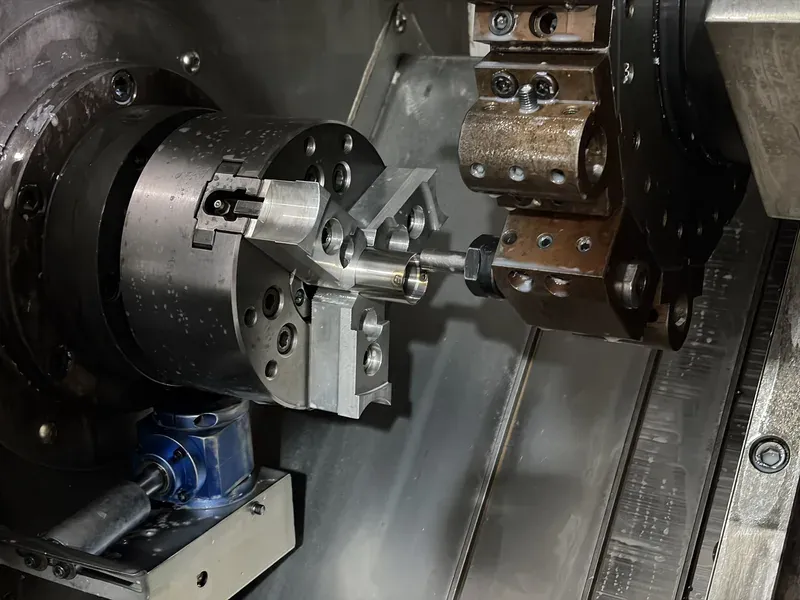
Yes. Our lathes with live tooling drill cross holes, mill flats and hexes, and tap threads while the part is still in the chuck, so milled features stay concentric to the turned diameters.
About Ø400 × 900 mm. Send the drawing and we confirm at review whether the part fits and how it will be held.
Yes. We fit threaded inserts and pins, and can thread or press parts together into an assembly before shipping, as on the three-part anodized assembly shown on this page.
Simple turned parts take about 5 days and complex parts about 15 days. Simple 6061 aluminum parts, a few pieces, can be rushed in 2 days from material in stock, with express shipping time added. We confirm the date per part number with each quote, before you order.
There is no fixed minimum quantity, but our main work is batches of 20 to 10,000 pieces per part number; prototypes are welcome as the first step toward a batch. From 20 pieces the unit cost drops sharply, because programming, tooling, and the first-article check are shared across the batch. Ask for prices at 5, 20, and 50 pieces and we will quote each one.
Drawing review with manufacturability feedback in the quote, a free first-article inspection report, and our remake guarantee: parts that do not meet your drawing are remade at our cost, with freight paid both ways. We reply by email within 24 hours and on WhatsApp within 12 hours.

Send the drawing. You get DFM feedback with the quote and a free first-article report on your first order. Email reply within 24 hours, WhatsApp within 12 hours.
Send Your Turning Drawing