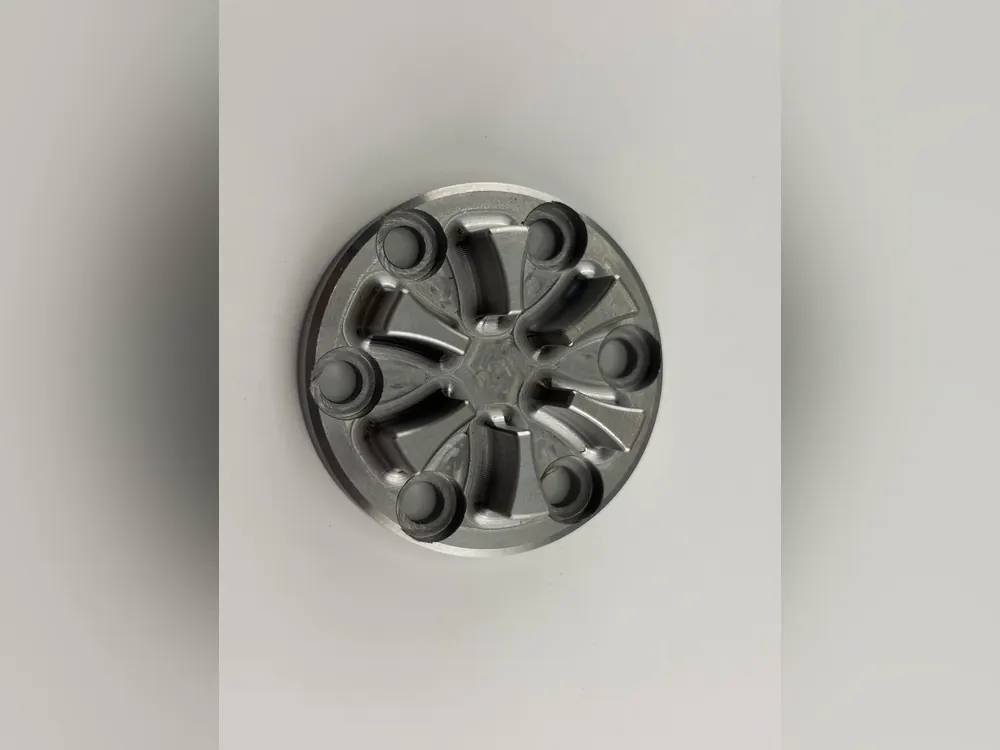
- Grades: 304, 303, and 316/316L (about half of our stainless work), plus 316Ti, 17-4PH, 420, 440C, 430, and 2205. Material certificates and RoHS reports on request.
- Stock: bar from about Ø3 to Ø50 mm; any grade above sourced in 3 days at most.
- Precision: 0.005 mm on specific features; walls to about 0.5 mm.
- Lead time: simple parts from about 8 days, complex parts from about 15 days, including heat treatment and finishing.
What is stainless steel CNC machining?
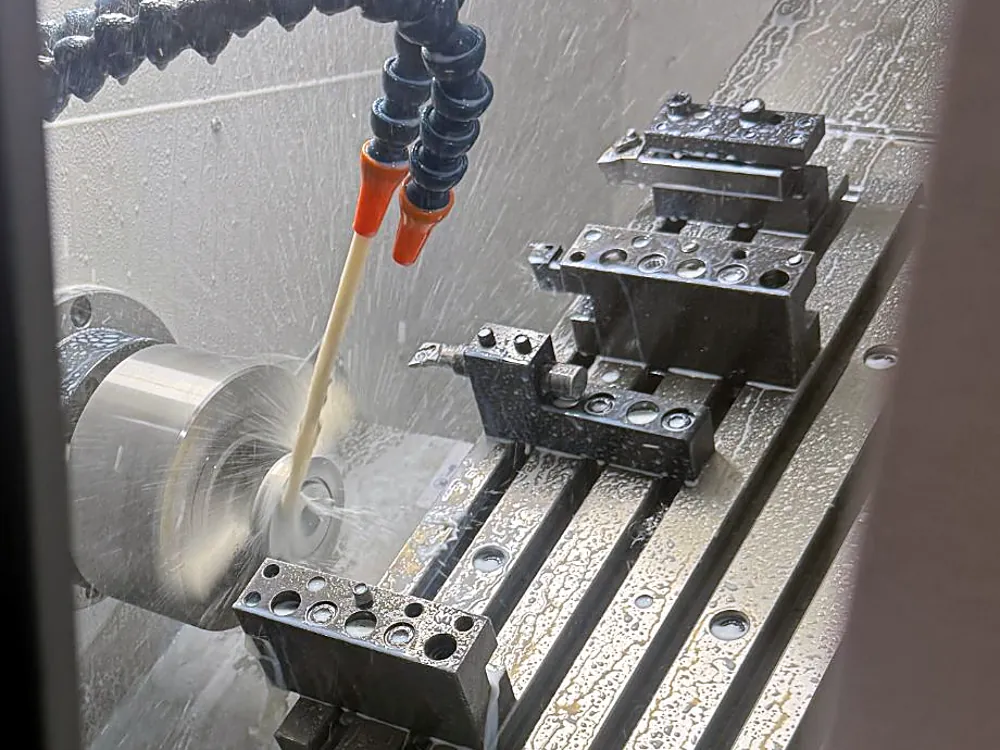
Stainless steel CNC machining means cutting stainless bar, plate, or castings into finished parts on computer-controlled lathes and mills. Stainless is chosen for corrosion resistance, strength, or hardness. It is harder to machine than aluminum: it cuts slowly, keeps heat at the cutting edge, and work hardens, so tool choice, feeds, coolant, and the order of operations decide whether sizes hold.
Stainless steel grades we machine
| Grade | Share of our stainless work | Known for | Sourcing |
|---|---|---|---|
| 304 (SUS304) | ≈50% together | General purpose, food and machine parts | In stock |
| 303 | Free-machining; not meant for welding | In stock | |
| 316 / 316L (SUS316) | Molybdenum for chlorides; L for welding | In stock | |
| 316Ti | ≈50% together | Titanium-stabilized 316 for heat | 3 days at most |
| 17-4PH (630) | Precipitation hardening, high strength | ||
| 420 / 40Cr13 | Martensitic, hardenable | ||
| 440C | High-carbon martensitic, wear parts | ||
| 430 | Ferritic, magnetic, lower cost | ||
| 2205 | Duplex: strong, pitting resistant |
Shares and sourcing times are from our shop. "Known for" is general material knowledge.
Which grade should you choose?
We machine the grade on your drawing and rarely ask a customer to change it. As a general guide, 303 is the easiest to cut but should not be welded; 304 suits most machine and food parts; 316/316L is the usual step up where there are chlorides or cleaning chemicals; 420 and 440C are for parts that must be hardened; 17-4PH gives high strength with less distortion in heat treatment.
We keep 304, 303, and 316 in stock, mostly as bar from about Ø3 to Ø50 mm. Every other grade in the table reaches us in 3 days at most. We buy to the grade on your drawing and supply a material certificate when you ask for one; a RoHS report can also be provided, depending on the grade and supplier.
Machining stainless steel: what goes wrong, and how we handle it
Stainless steel takes longer to machine, and sizes are harder to control. The classic trap is a small, deep blind hole: chips do not clear, heat cannot escape, and the drill wanders off line. This is how we handle the usual problems:
- Heat and work hardening. Dedicated stainless inserts, feeds calculated to keep heat down, and a coolant made for stainless. Much of it is decided at the process-planning stage, before the first cut.
- Broken taps. Small taps break in stainless. The industry answer, and ours, is to remove the broken tap by EDM rather than scrap the part.
- Deep holes. Depending on the size, we choose the method that puts the least stress into the part, and use EDM first where it makes sense.
- Thin walls and distortion. Stainless parts are normally sent out for solution treatment after roughing to release stress, then finished with even, secure clamping. Walls can go down to about 0.5 mm; see the thin-wall 304 cone case.
- Tight sizes. Specific features are held to 0.005 mm by turning, grinding, or wire EDM. How we decide what a tolerance needs is in our tight tolerance guide.
The one stainless job we could not make from castings
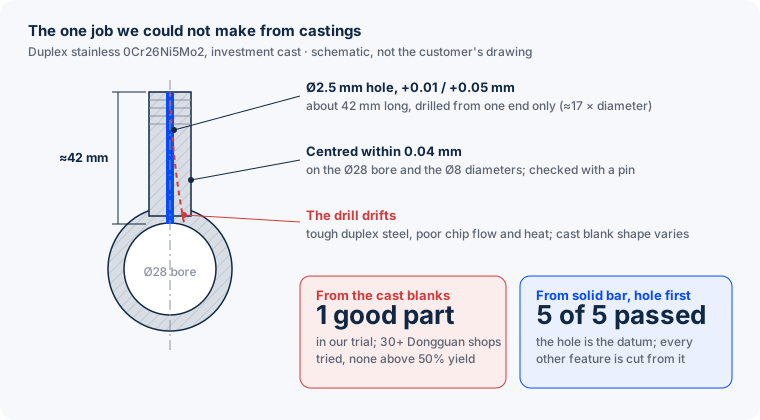
A Ø2.5 mm hole, 42 mm long, centred within 0.04 mm
A customer brought us a lost-wax cast part in duplex stainless (0Cr26Ni5Mo2), a ring with a stem. Down the stem runs a Ø2.5 mm hole, +0.01/+0.05 mm, about 42 mm long and drilled from one end only. It had to stay centred within 0.04 mm on the Ø28 bore and the Ø8 diameters. The customer told us more than 30 shops in Dongguan had tried it; none had passed more than half the parts.
We designed a dedicated fixture and tried several approaches. The drill kept drifting in the tough steel, and the cast blanks had little stock and varied in shape. Only one part from our trial passed. It is the only job we have not been able to do well.
We proposed a fix: leave more stock on the outside and other faces of the casting, drill the small hole first, and use that hole as the datum for every other feature. We estimated this would lift the yield to about 90%. The customer's casting mold had cost too much to change, so we machined the parts from solid bar using that approach instead: 5 delivered, 5 of 5 passed.
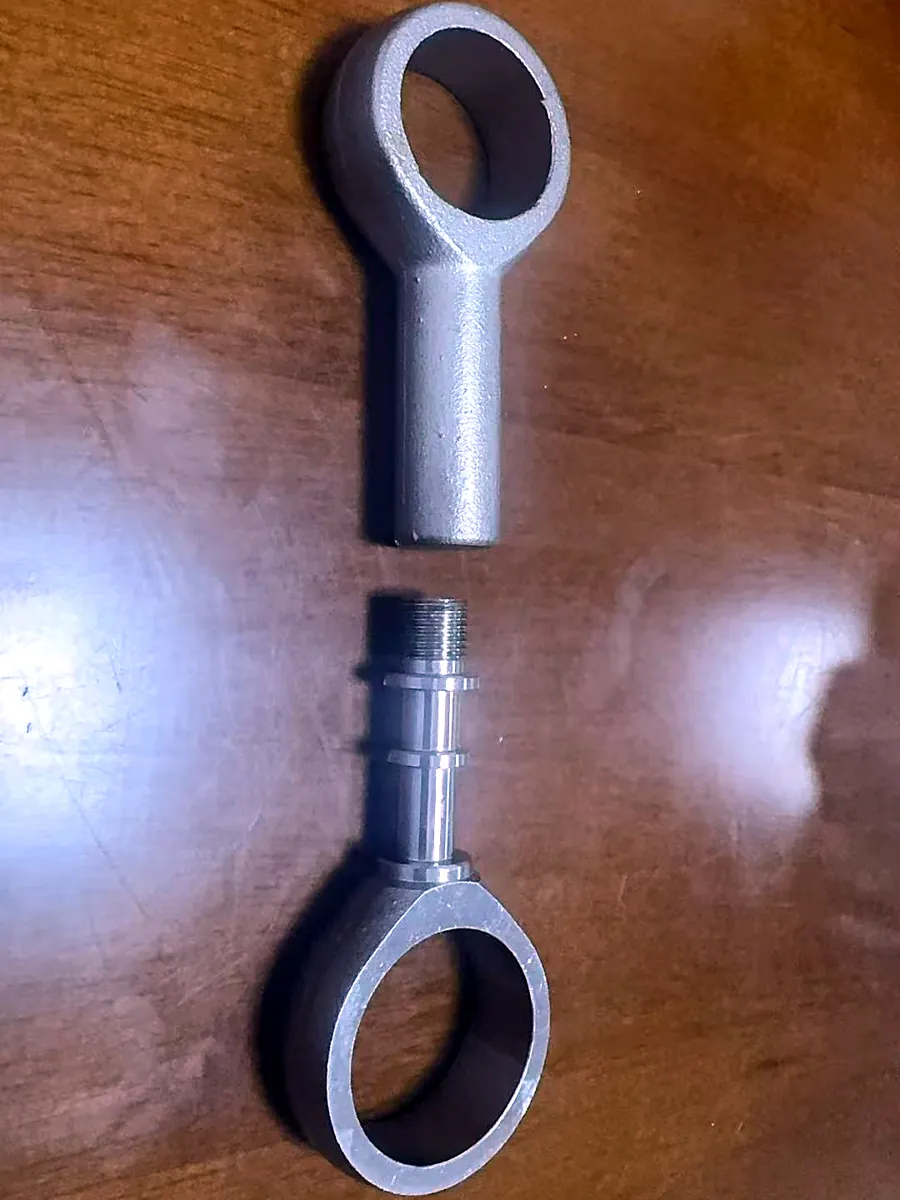
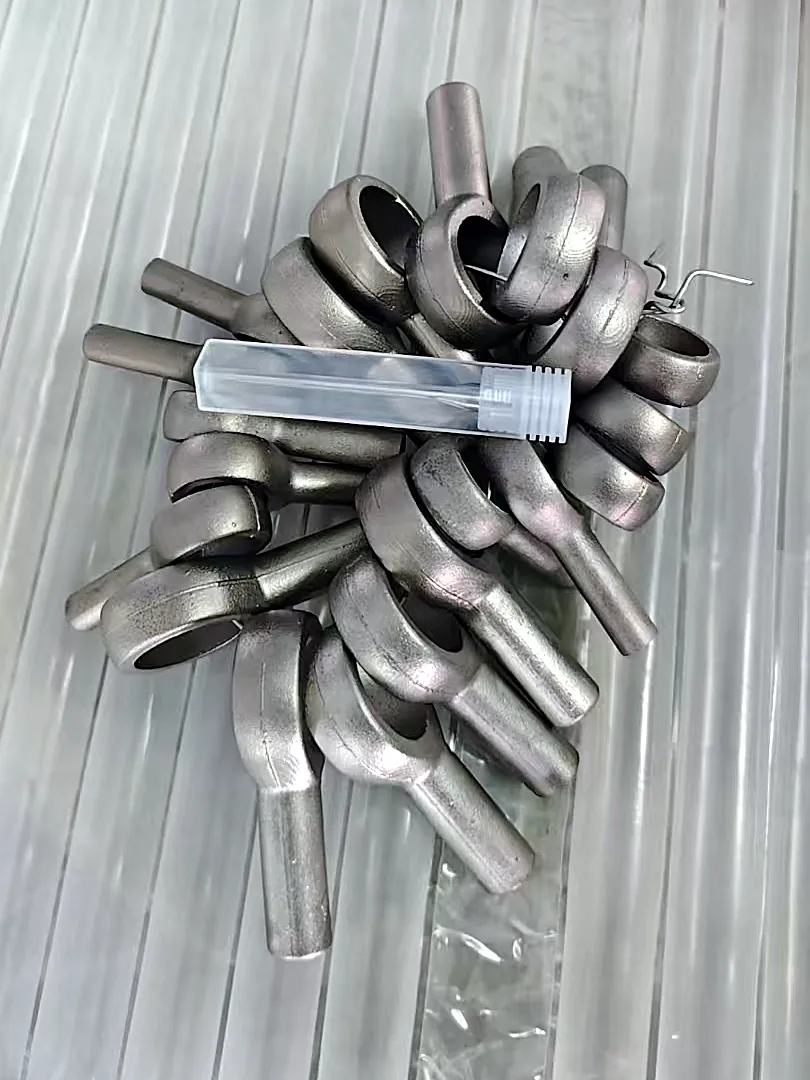
The lesson for buyers: when a casting or forging will be machined to tight sizes, ask the machine shop to review the blank drawing before the mold is made. A few millimeters of extra stock and a planned datum can be the difference between 1 good part and 9 in 10.
Stainless parts we have made
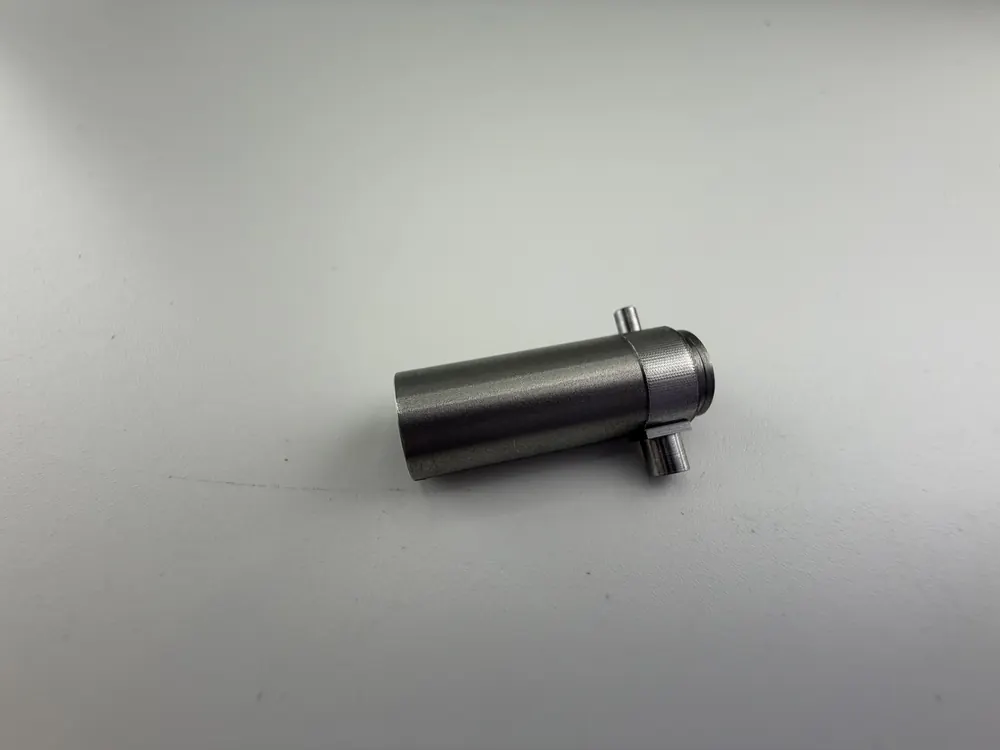
SUS430 · 100 pcs
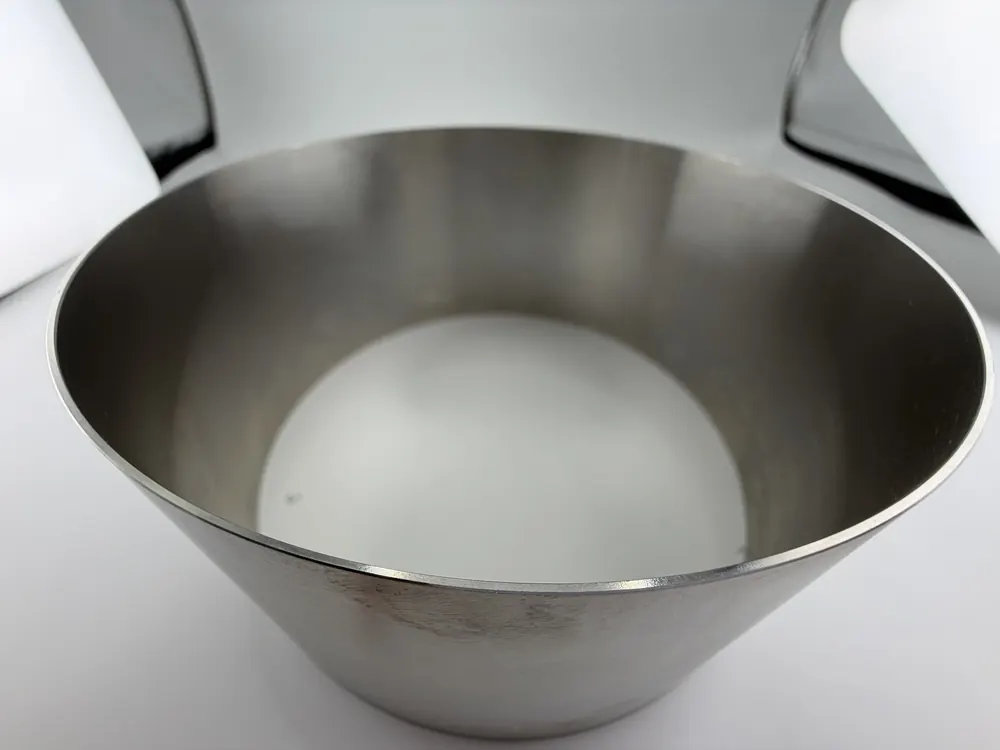
304 · 48 pcs
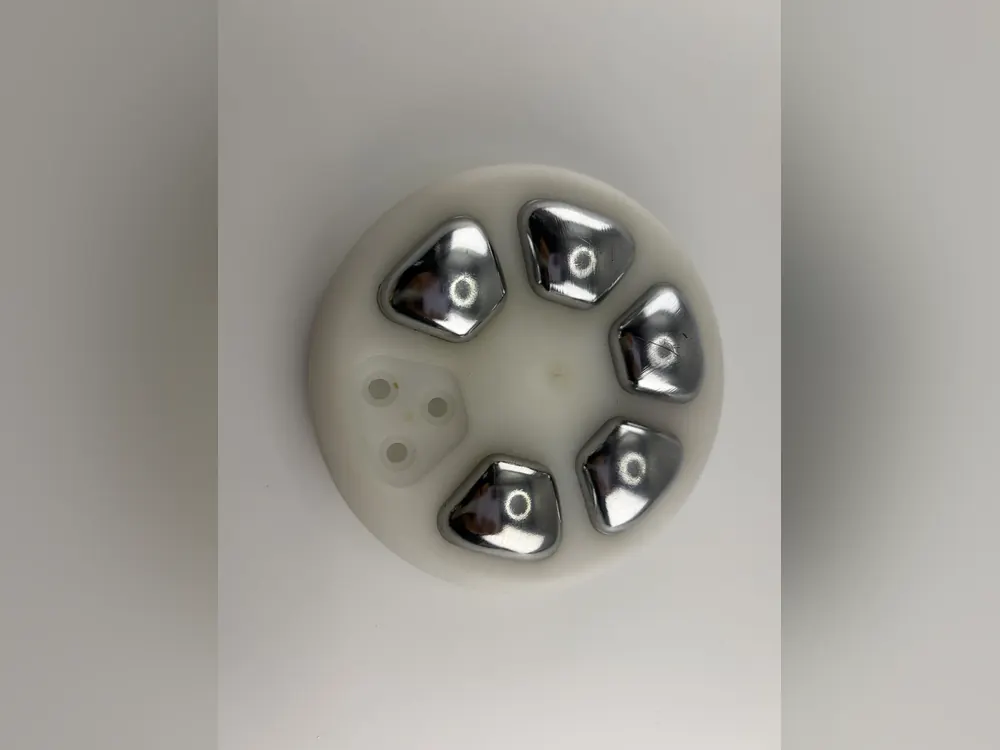
Stainless · 5 pcs
Stainless steel CNC machining at Meili
- 304, 303, 316 in stock; 17-4PH, 420, 440C, 2205 and others in 3 days at most
- Material certificates and RoHS reports on request
- 0.005 mm on specific features, walls to about 0.5 mm
- Solution treatment, hardening, passivation arranged with specialist partners
- From 1 piece; unit price drops sharply from 20
Heat treatment and hardened stainless
- Rough machining, leaving stock on critical sizes.
- Heat treatment by a specialist partner: solution treatment for stress relief, hardening for 420 and 440C to above HRC 50, or ageing (precipitation hardening) for 17-4PH.
- Finishing after heat treatment: critical sizes are ground or cut by wire EDM, because hardened steel moves and is too hard to turn accurately.
Hardness and sizes are checked, and inspection reports are provided when requested. See our quality control page for how parts are measured.
Finishing stainless steel parts
The finishes we arrange most are passivation, electropolishing, black finishes, brushing, and bead blasting. Bead blasting is done in our own factory; the others are done by specialist partners, and sizes are re-checked by us when the parts come back.
Rust is rare. Most stainless parts are not oiled at all. Martensitic grades such as 420, which can oxidize in air, are wrapped in anti-rust oiled paper before shipping.
Magnetism is a common question. 304 is non-magnetic when annealed, but machining can leave weak local magnetism where the material was overheated or heavily worked. The material is still 304. If your use is sensitive to it, put it on the drawing.
Lead time and cost of stainless parts
| Part | Typical lead time |
|---|---|
| Simple part | From about 8 days, including heat treatment and finishing |
| Complex part | From about 15 days, including heat treatment and finishing |
By our own calculation, the same part costs about 20% more in stainless than in aluminum. Most of the difference is machining time, not material. As with any metal, programming and setup are spread over the batch, so from 20 pieces the unit price drops sharply; here is why.
What we do not take
Batch orders from new customers that are only an idea, with no 2D drawing and no 3D model, or that copy another company's product. For existing customers we look at each case.
Quote your stainless parts at 5, 20 and 50 pieces
Send STEP and PDF, write the grade, heat treatment, and finish, and put “5 / 20 / 50” in the quantity field. Reply within 24 hours.
Get a stainless parts quoteFAQ
What is the best stainless steel for machining?
303 is the easiest to machine because of its added sulfur, but it is not meant for welding and resists corrosion less well than 304. 304 and 316/316L are the most common choices. In our shop, 304, 303, and 316/316L together make up about half of all stainless work, and we keep all three in stock.
Is stainless steel hard to machine?
Harder than aluminum, yes. Stainless cuts more slowly, holds heat at the cutting edge, and work hardens, so sizes are harder to control and small deep holes tend to drift. By our own calculation, the same part costs about 20% more in stainless than in aluminum, mostly because of longer machining time.
What tolerance can you hold on stainless steel parts?
Specific features can be held to 0.005 mm, by turning, grinding, or wire EDM depending on the feature. Walls can be machined down to about 0.5 mm.
How long does stainless steel CNC machining take?
Simple stainless parts take from about 8 days, and complex parts from about 15 days. Both figures include heat treatment and surface finishing when the drawing calls for them.
Can you machine hardened stainless steel such as 420 or 440C?
Yes. We rough the part, have it hardened to above HRC 50, and finish the critical sizes by grinding or wire EDM afterwards. 17-4PH parts are aged (precipitation hardened) by our heat-treatment partner.
Why is my machined 304 part slightly magnetic?
304 is non-magnetic when annealed, but machining can leave weak local magnetism in it, for example where the material was overheated or heavily worked. The material is still 304. If it matters for your use, write it on the drawing and we will plan for it.
Can you provide material certificates for stainless steel?
Yes. We buy to the grade on your drawing and provide a material certificate on request. RoHS reports can also be provided, depending on the grade and supplier.
Do you passivate or electropolish stainless parts?
Yes, through specialist partners: passivation, electropolishing, black finishes, and brushing. Bead blasting is done in our own factory.
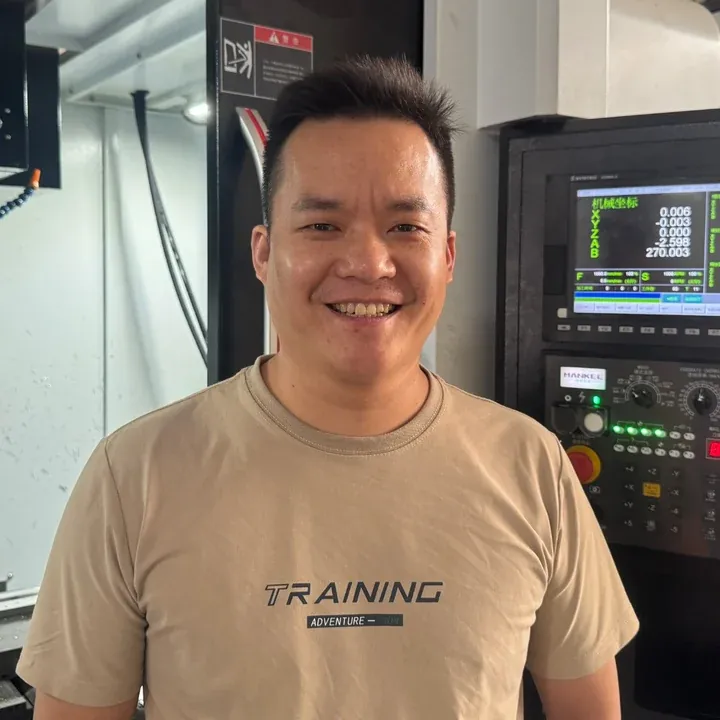
Raymond Liang
Co-founder and Technical Sales Manager at Meili Machining. Raymond spent ten years on CNC turning and milling before co-founding Meili in 2017, and he still reviews drawings and plans setups for difficult parts himself.
Grade shares, sourcing times, limits, lead times, costs and cases come from Raymond Liang and our shop records, October 2026. Grade properties in the table are general material knowledge. The duplex case is shown as our own schematic; the customer's drawing is not published. Updated October 11, 2026.