
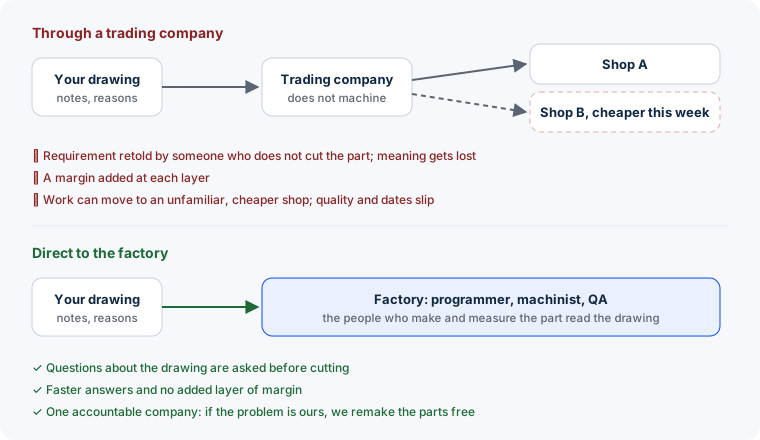
- A middle layer between you and the machinist adds cost, but the bigger risk is that your requirements are not understood correctly on their way to the shop.
- For one-off parts and small batches, ask one question first: how many CNC programmers, and is there a purchasing department? Fewer than two programmers and no purchasing department means the supplier is not set up for that work.
- Red flags: a price far below the other quotes, “we can make anything”, and no video of the machining.
- Start with a sample order, then move the batch.
China CNC machining: factory or trading company?
Trading companies are not the enemy. They do a real job, and for some buyers they are the right choice. But they are a different kind of supplier, and it helps to know which one you are dealing with.
Trading company
- Wide network of shops and processes
- Comfortable with very mixed orders
- One contact for many part types, so fewer suppliers to manage
Factory
- Faster response: questions go to the people making the part
- Your drawing is read by the machinist and programmer, not retold
- As the manufacturer, accountable for its own work
- Limited to what it actually makes
If your order is a long list of very different items across many processes and you do not want to manage suppliers yourself, a good trading company can save you work. If your parts are custom machined parts where the drawing must be understood exactly, buying direct from a China CNC machining factory usually works better.
What changes when a middle layer sits in between
The price
Every layer adds its margin. On the orders that reach us through other companies, a large share of what the end customer pays never reaches the shop that machines the part.
The understanding of your requirements
This is the part buyers underestimate. The main problem is not that someone makes a careless mistake. It is that the requirement is not understood correctly. Your drawing, your notes, and the reason behind a tolerance pass through a person who is not machining the part, and every retelling loses something. By the time it reaches the machine, the question that would have caught the problem is never asked.
Where your parts are actually made
Some trading companies move work to whichever shop is cheapest that week. We have seen this many times, even with parts that one shop had been making smoothly for a long time: the job moves to a cheaper shop that has never made it, quality problems follow, and the delivery date slips.
One example from our own shop. A trading company regularly reordered a part from us. We had worked out the machining method for it, which brought its cost down, and we shared that method with the trader. Then the part was moved to another shop. Within a month there were quality problems, and we helped once with a replacement, using parts we still had in stock; for steady customers we keep stock of repeat parts. After that, the trader did not come back. In all the time we made that part, it was never late. That episode is why we decided to start working directly with the companies that use the parts.
Who fixes it when something is wrong
With a middle layer, responsibility can get split between the trader and a shop you have never heard of. Our own rule is simple: whoever the order came from, if a problem is ours, we remake the parts free. We do not argue about it.
The programmer question
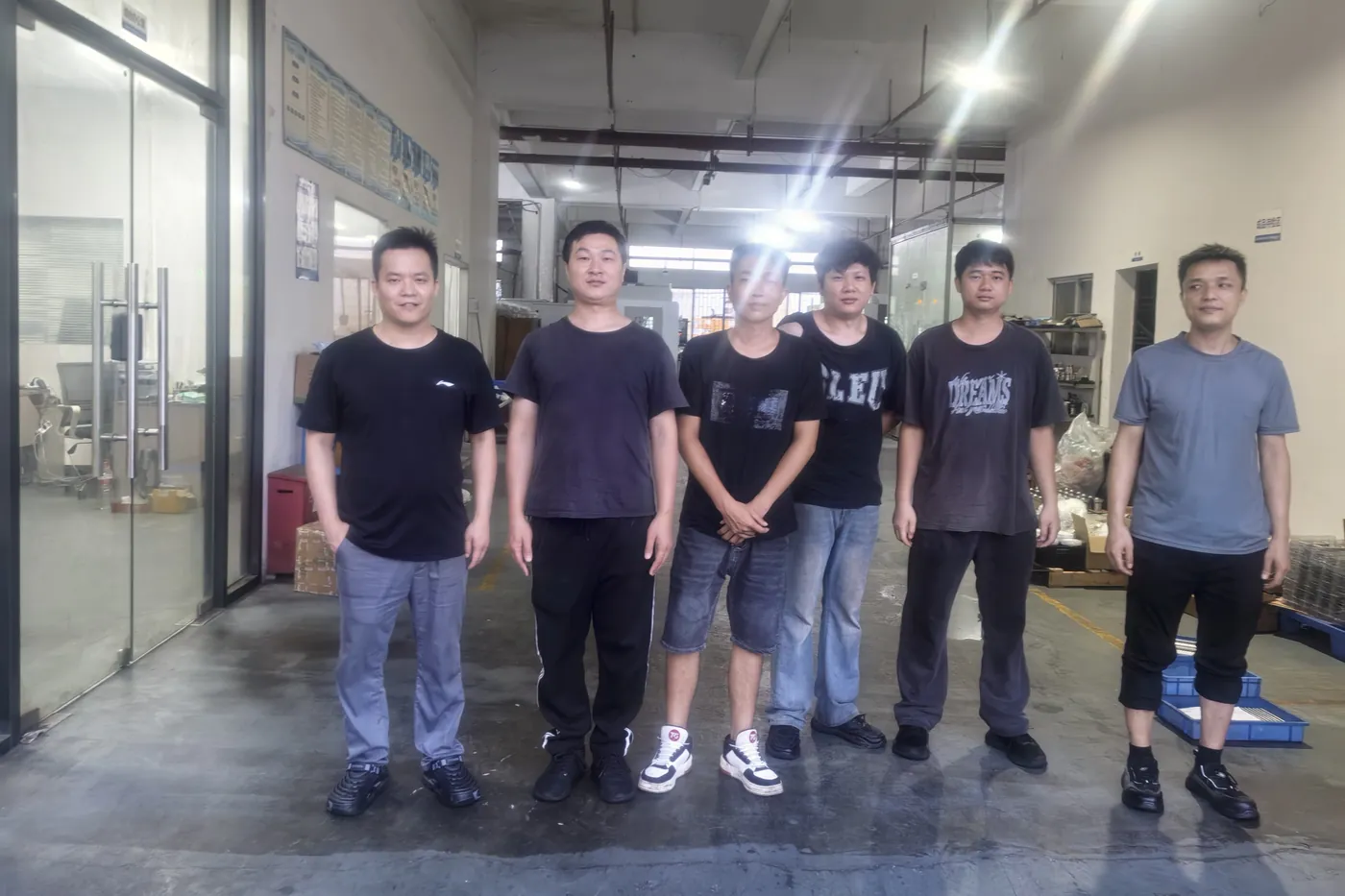
If your order has many one-off parts or small batches, ask this first:
If the answer is fewer than two programmers and no purchasing department, that supplier is not set up for one-off parts and small batches, whatever kind of company it is. Every new part needs its own program, and programming is the biggest block of one-time work on custom parts. With one programmer, your parts wait in a queue. Without purchasing, nobody is buying the right material, finishing, and hardware for dozens of different part numbers.
The same question opens up others: how many machines they run, what they mostly make, and how many new part numbers they handle in a typical week.
How to tell who you are talking to
- Look at the order mix. Trading companies take very mixed work. A factory usually concentrates on its main business and takes unrelated work only alongside it.
- Ask professional questions about your part. Send a drawing and ask what problems they usually see with parts like it. People who machine the part answer with specifics; people who pass it on answer with promises.
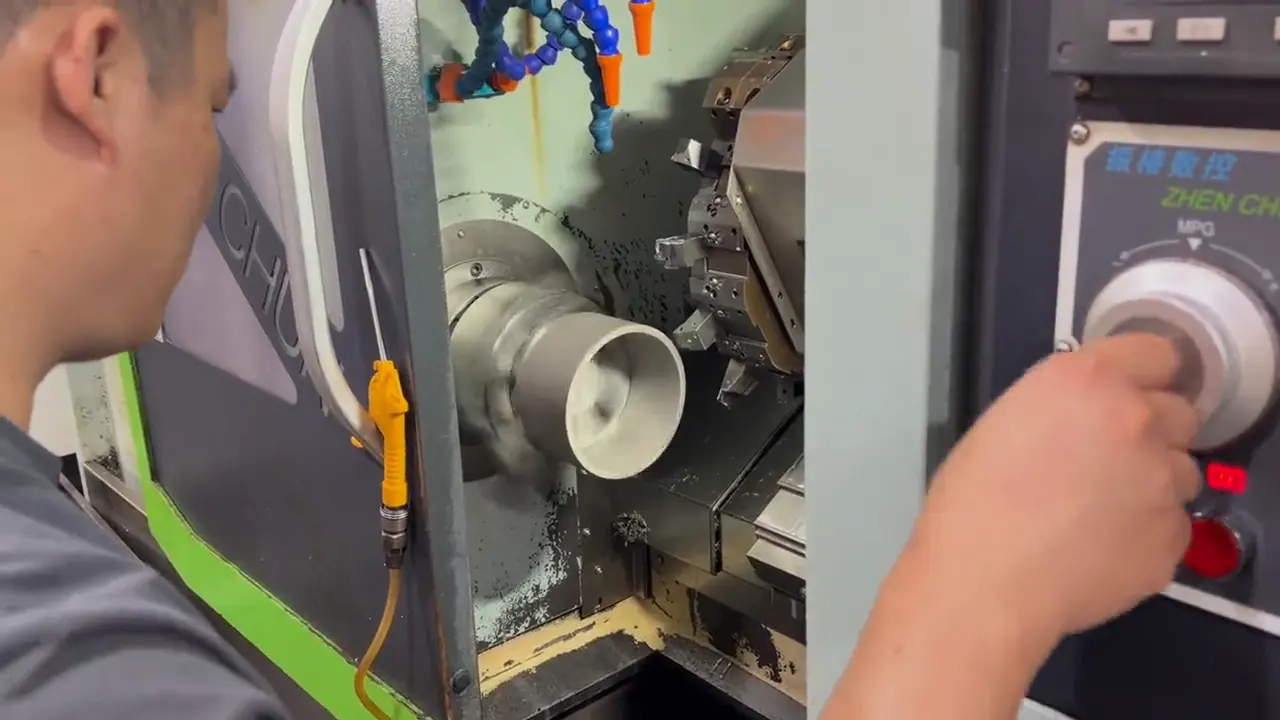
- Ask for a video of the machining. A short clip of a similar part on the machine, or a live video call from the shop floor, is easy for a factory and hard to fake.
- Check the registration. Every company in China is listed in the official National Enterprise Credit Information Publicity System[1]. Compare the legal name, address, registration date, and business scope with what the supplier tells you. The Canadian government's due-diligence guide for China recommends exactly this check[3]. The registry is in Chinese, so you may need help reading it.
Red flags
- A price far below the others. When you compare several quotes and one is unreasonably low, find out why before you order.
- “We can make anything.” No shop is good at everything. A supplier that never says no is usually passing the work on.
- No video of the machining. If they cannot show your type of part being made, assume they do not make it.
Five questions to ask any CNC supplier
When you compare China CNC machining suppliers, what you ask depends on your parts, but these five, in this order, tell you most of what you need:
- How many people, and how many programmers? The number of programmers decides how many one-off parts they can take on.
- What can you machine? Processes, part sizes, and materials, roughly.
- What is your equipment capacity? This decides how much they can make for you and how fast.
- What precision do you hold? People and equipment together set the real tolerance a shop can hold, not the brochure.
- Which industries have you made parts for? Send a drawing and ask what usually goes wrong with parts like it. For automation equipment, for example, an experienced shop will point out issues with special materials before you ask, and suggest a solution.
| Question | A good answer | A red flag |
|---|---|---|
| How many programmers? Purchasing? | Two or more programmers and a purchasing department, if you have many one-off parts | One programmer, no purchasing |
| What can you machine? | Specific processes, sizes, and materials, and what they do not do | “Anything” |
| Equipment capacity? | Machine types and counts, and what runs on them | No numbers |
| What precision? | Tolerances tied to the process and the inspection tool | One headline number for every part |
| Which industries? | Points out issues on your drawing before quoting | Only “no problem” |
Ask us the same five questions
Send a drawing and ask. You will get answers from the people who program and machine the parts, and a quote within 24 hours.
Send a drawingHow to start
CNC machining services in China are easy to find; the right supplier for your parts takes a little testing. Start with a sample order. It tells you more than any brochure: how the supplier asks questions about your drawing, whether the parts match it, and whether the date holds.
When new customers come to us, their worries are almost always the same two: will the parts arrive on time, and will they be right? We do not ask anyone to trust us with a large order on day one. Every customer relationship we have was built one order at a time. Our low-volume page lists our lead times, inspection steps, and payment terms, and your first order comes with a free first-article inspection report.
FAQ
Is it better to buy CNC parts from a factory or a trading company in China?
It depends on your order. A factory responds faster, answers technical questions directly, and is accountable for its own work. A trading company can make sense when your order is very mixed, spans many processes, and you want a single contact. For custom machined parts where the drawing must be understood exactly, buying direct usually works better.
How can I tell if a Chinese CNC supplier can handle my one-off parts?
Ask how many CNC programmers they have and whether they have a purchasing department. If they have fewer than two programmers and no purchasing department, they are not set up for many one-off parts and small batches, whatever kind of company they are.
How do I tell a trading company from a real factory?
Look at the order mix: trading companies take very mixed work, while factories focus on their main business. Ask professional questions about your part, ask for a video of the part being machined, and check the company in China's official registry, the National Enterprise Credit Information Publicity System.
What are red flags when choosing a CNC supplier in China?
A price far below the other quotes, a claim that they can make anything, and reluctance to show a video of the machining.
Is CNC machining in China cheaper?
Labor is cheaper. A skilled CNC machinist costs us about US$10 an hour in Dongguan, by our estimate, while the US median pay for machinists and tool and die makers was US$27.74 an hour in May 2024. But a custom part needs about the same hours of programming and setup anywhere, so the saving is largest on batches, where that one-time work is shared across many parts.
How should I start with a new CNC supplier in China?
Start with a sample order. Check the parts, the communication, and the delivery date before you move a batch.
Raymond Liang
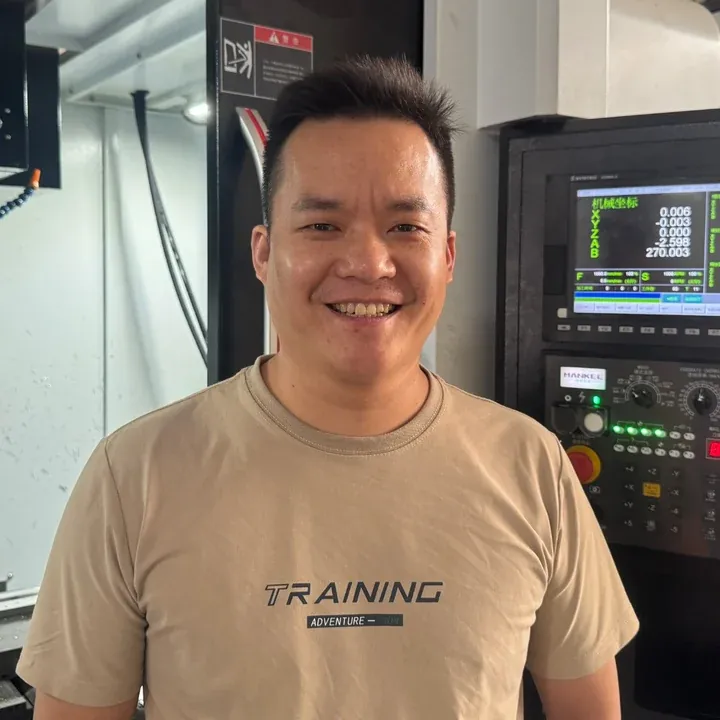
Co-founder and Technical Sales Manager at Meili Machining in Dongguan. Raymond spent ten years on CNC turning and milling before co-founding Meili in 2017, and he still reviews drawings and plans the setups for difficult parts himself.
Sources
- State Administration for Market Regulation. National Enterprise Credit Information Publicity System (official company registry, in Chinese). www.gsxt.gov.cn
- U.S. Bureau of Labor Statistics. Occupational Outlook Handbook, “Machinists and Tool and Die Makers” (median pay, May 2024). www.bls.gov
- Trade Commissioner Service, Government of Canada. “Conducting due diligence in China: a guide for Canadian businesses.” www.tradecommissioner.gc.ca
How this article was made: the order share, the experiences with trading companies, the example of the moved part, and the questions to ask come from Raymond Liang's first-hand experience since 2017. The text was drafted with AI-assisted editing and reviewed by Raymond before publishing.